Verdict
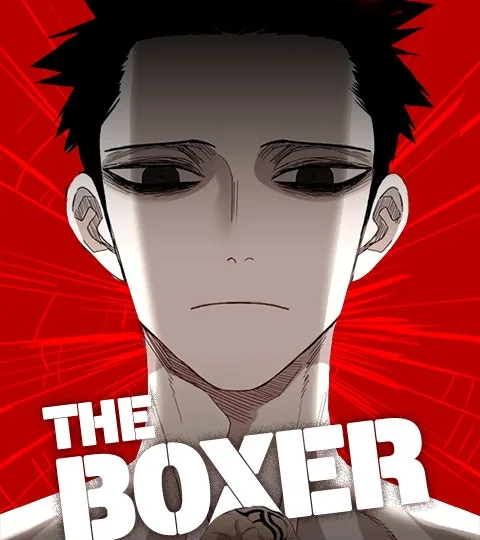
The Boxer looks like a sports story and behaves like a moral drama. Yu does not enter the ring because he dreams of a belt. He has an almost inhuman ability to perceive and avoid violence, paired with so little attachment to living that victory barely registers. Coach K sees a perfect instrument. The reader is asked to notice the difference between developing a person and optimizing a weapon.
That premise gives the series a shape unlike a normal tournament climb. Opponents often carry more visible desire than the protagonist, so each fight becomes a short life under pressure. The pattern can feel schematic, yet it also lets JH ask the same question from different social positions: what does boxing reveal when strength cannot repair grief, fear or exploitation?
Review scope and spoiler policy
- Scope: the completed official English WEBTOON edition.
- Spoilers: premise, character function and theme only; no final match outcomes.
- Best for: readers of psychological drama, morally serious sports stories and concise action.
- Content note: child abuse, exploitation, depression and severe violence are central rather than incidental.
Yu is not an ordinary sports protagonist
Most sports leads begin with desire and insufficient ability. Yu begins with terrifying ability and almost no desire. That inversion removes the familiar suspense of whether training will work. Instead, the story asks whether participation can reconnect him to other people or merely make his emptiness profitable.
Yu’s stillness is visually effective because the world around him overreacts. Opponents strain, crowds shout and Coach K calculates, while Yu seems to occupy a quieter time scale. The danger is that emotional distance can become monotony. The series avoids that most successfully by giving rivals complete motives instead of asking Yu to carry every scene.
Coach K and the machinery of talent
Coach K is compelling because his abuse often wears the language of excellence. He can identify potential and build champions, but he treats pain as usable material. The story does not need him to be secretly incompetent; his methods are disturbing precisely because they produce results recognized by the sport around him.
That makes The Boxer sharper than a simple evil-mentor plot. Institutions reward spectacular outcomes and look away from the person being consumed. Yu’s talent does not protect him from exploitation. It makes exploitation easier to justify.
How the fights tell character stories
JH favors clarity over technical simulation. A stance, repeated motion or shift in panel rhythm communicates what an opponent believes about strength. Backstory enters close to the fight, sometimes too conveniently, but the best arcs make the result emotionally intelligible before it is physically decided.
The art uses emptiness well. White space slows time around a decisive exchange, while distorted faces show panic without needing a paragraph of explanation. Not every boxing mechanic is realistic, and the series should not be used as a technical guide. Its ring is psychological space first.
Where the series overreaches
The symbolism can become explicit enough to leave no room for the reader. Darkness, light, monsters and salvation are sometimes named immediately after the image has already made the point. A few opponents also feel designed to deliver one moral variation rather than to exist beyond it.
The bleakness is purposeful, but intensity is not automatically depth. When suffering stacks faster than relationships can breathe, the story risks turning pain into atmosphere. The later movement toward an answer works best for readers who accept the series’ spiritual language; others may find it more asserted than earned.
Who should read it?
- Read it if you want fights that reveal biography rather than only rank power.
- Read it if an emotionally remote protagonist sounds intriguing rather than frustrating.
- Skip it if sustained abuse and despair make entertainment difficult.
- Do not expect a realistic boxing manual or a cheerful team-sports rhythm.
Where to read legally
WEBTOON lists The Boxer by JH as a completed Sports series. The official page is the reliable place to confirm episode access and creator attribution; avoid reposts that remove credits or reorder chapters.
Why the opponents matter more than a ranking
Many sports stories introduce opponents as steps on the protagonist’s ladder. The Boxer often reverses that relationship. A challenger receives enough history, fear and ordinary desire that Yu’s overwhelming ability becomes the event entering someone else’s life. Winning can therefore feel disturbing rather than celebratory.
This structure also explains why some readers experience the middle as episodic. Attention leaves Yu to build another fighter’s world, then a bout tests that world against his emptiness. If you need constant protagonist development, the detours may frustrate you. If the ethical cost of competition is the point, they are where the series becomes more than a bleak power fantasy.
Violence, despair and reader readiness
The clean artwork does not make the material gentle. Abuse, exploitation, depression and bodily harm shape several character arcs. The series is rarely graphic for spectacle alone, but it can remain emotionally severe for long stretches without offering the release expected from an inspirational boxing narrative.
Readers should also distinguish darkness from depth. Not every painful backstory lands equally, and repetition can make suffering feel arranged to prove a thesis. The work earns its strongest moments when a small act of recognition interrupts that machinery rather than when another tragedy merely confirms it.
Frequently asked questions
Is The Boxer manhwa completed?
Yes. WEBTOON currently labels the official English series Completed.
Is The Boxer realistic?
Its emotional and exploitative dynamics can feel credible, but abilities and matches are heightened for dramatic effect. It is a psychological sports drama, not technical nonfiction.
Does The Boxer have an anime?
This review concerns the webtoon. Check a current official production announcement before treating adaptation posts or fan trailers as confirmation.
Continue reading
Continue with Fighting manhwa guide, psychological thriller manhwa, or completed manhwa guide.
Sources and verification
- WEBTOON — primary source
Official platform · accessed 26 Aug 2026