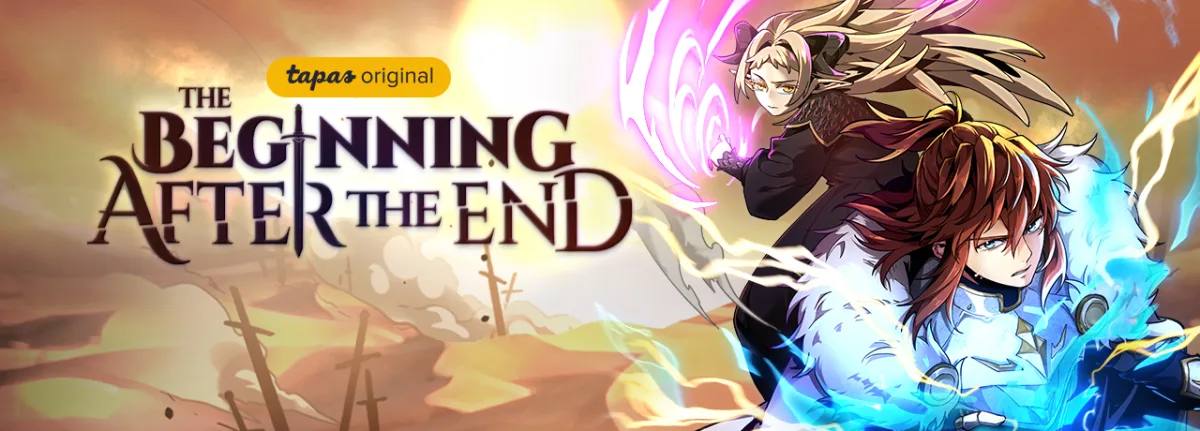
Verdict
The Beginning After the End is an easy recommendation with an important reservation. It gives readers the satisfying mechanics of a progression fantasy—training, elemental affinities, dangerous travel and an academy—but its better question is whether a former king can become a healthier person when power is no longer the only thing defining him. Arthur is ahead of his peers from the beginning, so suspense rarely comes from wondering whether he is secretly capable. It comes from whether his old instincts will protect or isolate the people he now loves.
That emotional thread is strong enough to carry the comic through some familiar fantasy architecture. Readers who need every victory to be uncertain may find Arthur too favored. Readers who enjoy competence but still want family, guilt and responsibility to matter will find considerably more texture than the title’s generic reincarnation pitch suggests.
Review scope and spoiler policy
- Scope: the official English comic edition on Tapas, through the material available at the review date.
- Spoilers: premise, early training and broad structural discussion only; no late identities or outcomes.
- Best for: readers of fantasy progression, reincarnation stories and academy arcs.
- Think twice if: an unusually capable child protagonist immediately breaks your suspension of disbelief.
A second life that should mean something
King Grey does not arrive as a blank slate. He remembers command, combat and the emotional sterility of a life spent at the top. Reincarnation therefore gives him an advantage and an embarrassment: he can read danger better than a child should, yet he has almost no practice receiving uncomplicated affection. The early family chapters are not an obstacle before the adventure. They establish what this life offers that his first one did not.
The comic is most persuasive when Arthur’s maturity is partial rather than absolute. He can make tactical decisions, but pride and secrecy still distort his judgment. That distinction prevents the story from becoming an adult mind calmly speed-running childhood. He is knowledgeable, not finished.
Magic, progression and academy structure
The magic system is readable because it turns abstract advancement into physical discipline. Elemental use, mana control and bonds have clear effects on what Arthur can attempt. Training usually connects to a later problem, so the story delivers progression without reducing every chapter to a status screen.
Academy material widens the cast and exposes social hierarchies, but it also brings the comic closest to standard power-fantasy rhythms. Arthur repeatedly enters rooms where the reader already knows he is exceptional. The better academy conflicts test restraint, loyalty or public responsibility; the weaker ones exist mainly to let another skeptic underestimate him.
Art and adaptation rhythm
The visual storytelling grows more confident as the world expands. Spell effects remain distinct, environments provide useful scale, and character acting is clearest in domestic or quiet confrontations. Action is generally easy to follow on a phone because movement travels vertically without dissolving into disconnected impact panels.
The adaptation occasionally jumps across connective tissue that prose can hold more naturally. A new relationship, location or political concern may arrive before the previous beat has settled. This is not constant, but it explains why some stretches feel like highlights from a larger journey while others feel fully dramatized.
What works and what does not
- Works: Arthur’s family gives reincarnation an emotional purpose.
- Works: progression is visual, legible and tied to practice.
- Works: the world expands from home to travel, school and politics without losing its central relationship stakes.
- Does not always work: repeated proof of Arthur’s superiority can flatten suspense.
- Does not always work: transitional material sometimes feels compressed.
- Does not always work: several supporting characters initially function more as tests for Arthur than as independent lives.
Who should read it?
- Read it if you want an accessible bridge between isekai, academy fantasy and long-form progression.
- Read it if a capable lead is appealing only when relationships still impose real obligations.
- Skip it if an overqualified protagonist removes the kind of uncertainty you value most.
- Try the novel instead if you prefer denser internal reasoning and more connective world detail.
Where to read legally
Tapas is the official English home of the comic and identifies Tapas Entertainment, TurtleMe and MGK-Story in its current credits. The platform lists the update schedule and episode catalog directly. Availability, free-access windows and purchase terms can change, so check the series page rather than relying on an old chapter count copied elsewhere.
Where the reading experience slows down
The comic’s weakest stretches are not necessarily its quietest. Family scenes usually have a clear emotional purpose. Momentum drops when a new rival or social hierarchy exists mainly to misunderstand Arthur, because the reader has already been shown the gap in ability. A confrontation can look energetic while producing no new uncertainty.
Longer political arcs improve that problem by making information and trust as important as combat. Arthur cannot solve a damaged institution simply by demonstrating another spell. Readers who feel the academy repeating itself should judge one transition beyond it before deciding that the entire series has become a loop.
Comic or novel: the practical choice
Choose the comic if your main pleasure is seeing training become movement: elemental effects, beast bonds and vertical action are immediately legible. Choose the novel if Arthur’s internal contradictions and the connective reasons behind travel or political decisions matter more. Reading both from chapter one is unnecessary unless comparison itself is the hobby.
A sensible route is to begin with the official comic, note the episode where you stop, and use the platform’s source information before changing formats. Chapter numbering rarely maps one-to-one across prose and comic releases, so a fan conversion chart should be treated as approximate rather than editorial fact.
Frequently asked questions
Is The Beginning After the End a manhwa?
It is commonly grouped with manhwa because its official full-color comic uses the Korean webtoon production ecosystem and vertical format. Its original creator, TurtleMe, is Korean-American and the story began as an English-language web novel, so “English-language webcomic adaptation” is the most precise fuller description.
Is the comic better than the novel?
The comic is faster and gives magic immediate visual clarity. The novel offers more internal reasoning and transition detail. The better version depends on whether you value momentum or narrative texture.
Is it only a power fantasy?
Power is a major pleasure, but the series is strongest when Arthur’s advantage creates secrecy, responsibility and fear of loss. Readers uninterested in prodigy stories may still find those elements insufficient.
Continue reading
Continue with Best isekai manhwa, fantasy manhwa guide, or Manhwa reviews.
Sources and verification
- Tapas — primary source
Official platform · accessed 26 Aug 2026