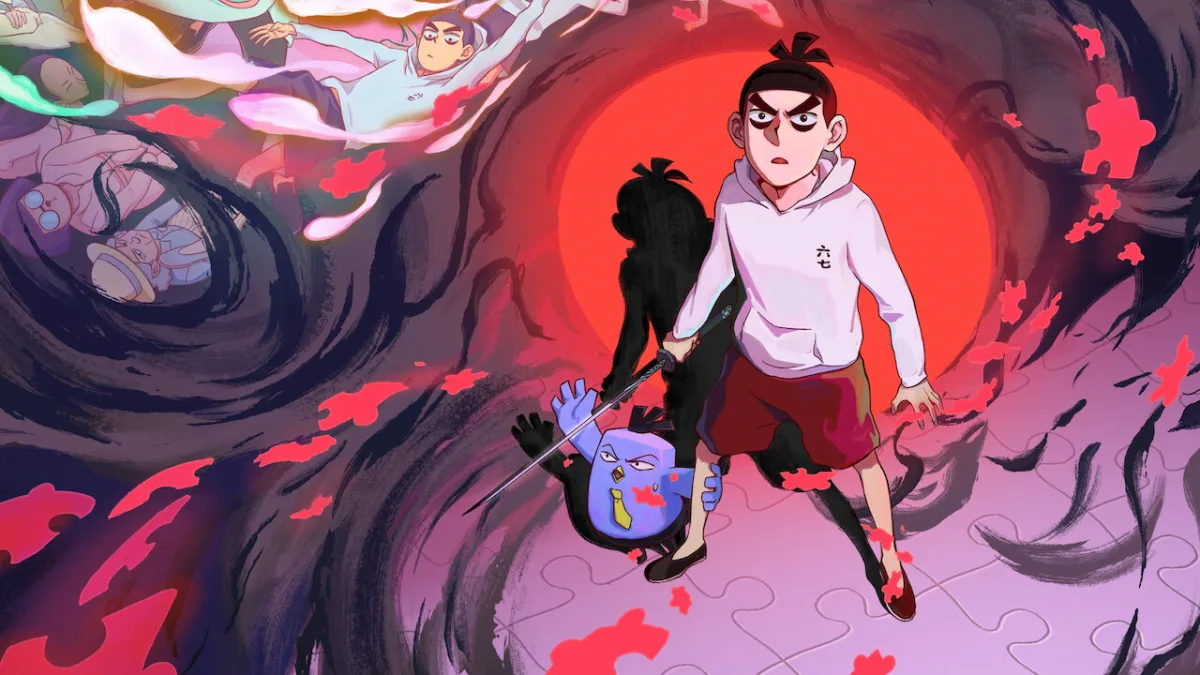
Verdict
The first impression is deliberately cheap: a broke hairdresser throws scissors with telekinesis, takes incompetent assassination jobs and argues with a blue chicken. The series uses that smallness to lower the audience’s guard. A client who looks like a punchline receives a private hurt; an absurd target reveals a community; Seven’s failure becomes an act of empathy he cannot explain.
When the larger assassin world arrives, the show does not discard the comedy as childish prologue. It makes the island’s silliness the evidence that Seven has lived another kind of life. The tonal change can feel sudden, but it has an emotional foundation stronger than the early episode plots suggest.
Scope and spoiler policy
- Scope: the licensed Scissor Seven seasons represented on Netflix’s official title page.
- Spoilers: setup, tonal development and broad character motivation only.
- Format: Chinese-language short-form adult animation blending comedy and action.
- Best for: viewers who like underdog comedy that grows into found-family stakes.
Why the comedy is not filler
Seven’s missions rarely function as efficient plot steps. They introduce island residents, puncture macho assassin logic and show that he cannot treat strangers as disposable. The repetition is character testing: every failed job asks whether kindness is an accident or the person he is becoming.
Not every joke works. Toilet humor, exaggerated faces and anticlimax can feel juvenile, particularly when watched in a binge. The short runtime helps. Episodes leave before one gag style exhausts itself, and later callbacks give apparently disposable encounters a place in the island’s social fabric.
Seven, memory and chosen identity
Amnesia is often a device for withholding lore. Here it creates a clean moral question: if Seven’s former self was dangerous, do recovered skills carry recovered obligation? Dai Bo wants the money and the truth, but the daily life he builds around Seven quietly competes with the prestige of that past.
The show wisely avoids making innocence purity. Seven lies, improvises and wants recognition. What changes him is repeated contact with people whose problems cannot be solved by killing the designated target. His new identity is messy because it is practiced rather than revealed.
Art and action
Loose linework allows bodies and faces to distort instantly for comedy. Backgrounds can be sparse, but posing is rarely generic. When combat becomes serious, the same flexibility produces sharp silhouettes, surprising timing and movement that feels authored instead of assembled from effects.
Later set pieces are more polished without losing the hand-drawn irregularity that defines the show. Viewers expecting uniform model fidelity may read the early style as low budget. Viewers responsive to timing and expression will see why a cleaner surface could actually weaken it.
Does the tone become too serious?
The assassin politics introduce violence and melancholy that the earliest episodes only hint at. The shift is intentional, but some seasons balance the two modes better than others. A viewer who wants pure sketch comedy may miss the freedom of the opening; a viewer waiting only for lore may undervalue why later danger matters.
The series is best understood as both. Comedy builds attachment and gives Seven an alternative life. Action tests whether that life can survive contact with the system that produced him.
Who should watch it?
- Watch if you enjoy Mob Psycho 100-style sincerity beneath visual absurdity.
- Watch if short episodes make experimentation more appealing.
- Stay through the early mission format long enough to see the island become a community.
- Skip if crude jokes or abrupt transitions make emotional investment impossible for you.
Where to watch legally
Netflix maintains an official Scissor Seven title page and identifies it as Chinese-language adult animation combining comedy, action and amnesia. Season and dubbing availability can vary by country. Check the title page while signed into your local catalog rather than assuming every regional page matches.
Chicken Island earns the later stakes
The island initially resembles a container for unrelated jokes. Repeated shops, neighbors and petty problems slowly create a place where Seven is known without being prestigious. That ordinary recognition competes with the assassin identity attached to his missing past.
Later danger works because protecting the island is not an abstract hero assignment. The audience has seen who will complain, exploit a discount, request a haircut or offer help badly. Comedy supplies the social detail that a more serious opening might have rushed past.
Short episodes, uneven seasons
Short form encourages sharp experiments and makes a weak joke easier to leave behind. It can also make mythology arrive in fragments. A dramatic ending may be followed by a comic reset before the emotional consequence receives the space a viewer expects.
As the assassin plot grows, seasons carry different ratios of island comedy, travel and confrontation. That variation is part of the show’s identity, though not every transition is graceful. Viewers should expect continuity with elastic tone rather than a clean conversion from comedy season to action season.
Why the rough line remains valuable
Expression depends on what the drawing is allowed to break. Seven can collapse into a scribble during humiliation and become a sharp silhouette when instinct takes over. The contrast communicates identity faster than a uniformly polished model could.
This does not excuse every sparse background or repeated shortcut. It explains why budget and intention cannot be judged from surface smoothness alone. The right question is whether timing, pose and framing make a scene readable—and Scissor Seven answers yes more often than its deliberately scruffy first impression suggests.
Frequently asked questions
Is Scissor Seven anime or donghua?
It is donghua: animation produced in China. “Anime” is sometimes used broadly in English interfaces, but country and production context are more precise here.
Does Scissor Seven get serious?
Yes. The assassin-world plot grows more violent and emotionally direct, though comedy and island life remain central to Seven’s identity.
Is the English dub worth watching?
It is a licensed option and can make the rapid jokes easier to follow. The original Mandarin track preserves the initial comic timing; sample both if your Netflix catalog provides them.
Continue reading
Continue with best donghua by genre, Donghua reviews, or Fog Hill of Five Elements review.
Sources and verification
- Netflix — primary source
Official platform · accessed 26 Aug 2026