
Verdict
Perfect World is built for viewers who want cultivation to feel enormous. Mountains split, ancient creatures fill the frame and every breakthrough reveals a world larger than the one Shi Hao has just mastered. At its best, the donghua turns that constant expansion into genuine wonder. At its weakest, it races through names, realms and relationships so quickly that the audience is left admiring the scale without fully feeling its meaning.
The series improves dramatically as a 3D production, but its storytelling habits remain stubborn. Later battles are more confident and visually coherent than the opening, while exposition is still compressed and emotional transitions are often too brief. That makes Perfect World exciting rather than consistently absorbing: easy to continue when the momentum works, difficult to explain clearly after several dense arcs have passed.
AdaptLore scorecard
- Overall: 8.2/10.
- 3D spectacle and environments: 9.2/10.
- Combat direction: 8.9/10.
- World-building ambition: 8.7/10.
- Story clarity: 6.5/10.
- Character continuity: 7.2/10.
- Long-term payoff: 8.6/10.
- Newcomer accessibility: 6/10.
Quick facts
- Original title: Wanmei Shijie.
- Source: Chen Dong’s web novel of the same name.
- Format: long-running Chinese 3D cultivation donghua.
- Status: ongoing; this is a long-term watch, not a completed story.
- Spoiler level: mild discussion of the premise and broad progression, with no major late outcomes.
- Best for: viewers who value spectacle, rapid advancement and a powerful central hero.
What is Perfect World about?
Shi Hao begins as a gifted child carrying the consequences of a stolen birthright and a divided family. Raised in Stone Village, he grows up among people who give his power an emotional purpose rather than treating it as destiny alone. From that intimate beginning, his journey spreads into clan rivalries, sacred lands, ancient inheritances and conflicts that reach far beyond the lower world.
The central idea remains clear even when the lore becomes difficult to track. Shi Hao refuses to let inherited status decide who deserves power, dignity or survival. He advances partly to recover what was taken from him, but also because curiosity and defiance are inseparable from his personality. Perfect World is less about reaching one destination than repeatedly discovering that the known universe was only the outer wall of something greater.
Shi Hao is the reason the momentum works
A passive protagonist would disappear inside this much mythology. Shi Hao does not. He is bold, mischievous and often most entertaining when an institution expects obedience from him. His appetite for danger gives the story permission to move, while the memory of Stone Village and his family prevents him from becoming only a machine for collecting stronger techniques.
There is a cost to making him so dominant. Many confrontations are framed around how decisively he will overturn the situation rather than whether it will change him. Opponents can become measurements of his current level instead of complete characters. The series finds more tension when pride, responsibility or an old bond complicates victory; raw power alone rarely keeps a long cultivation story emotionally unpredictable.
A vast world that is not always easy to understand
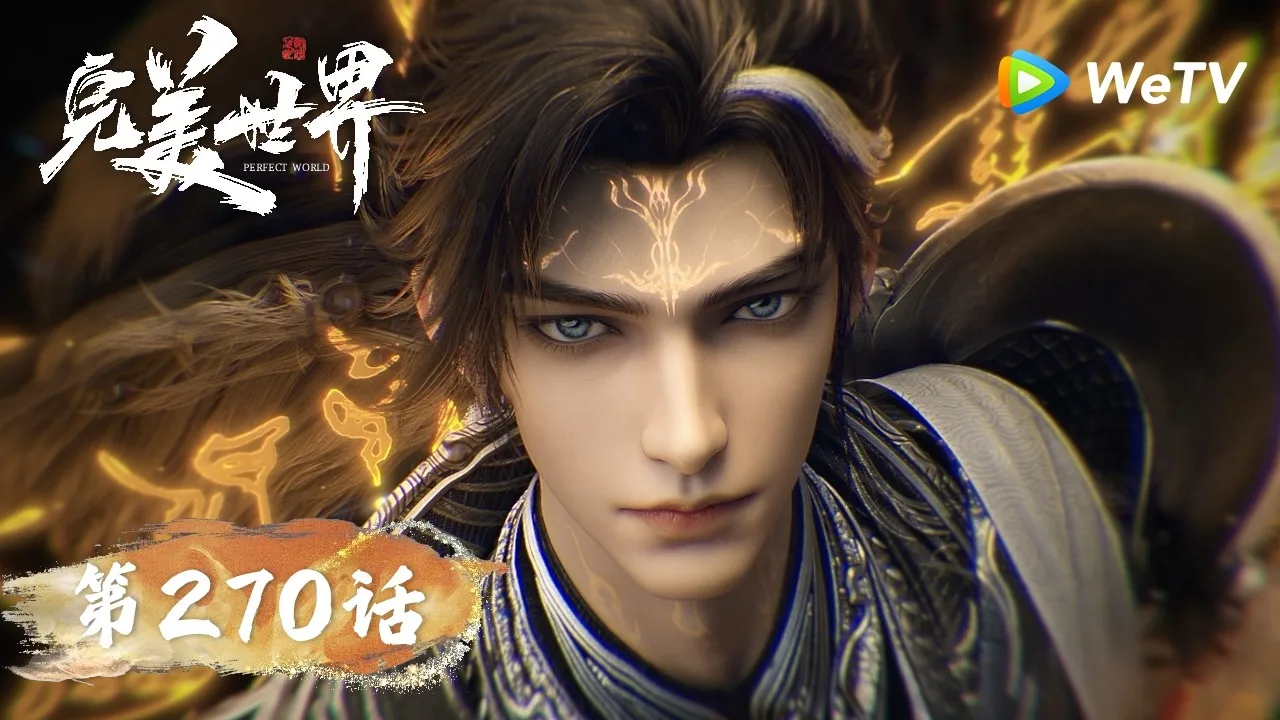
Perfect World has no shortage of imagination. Stone settlements, ritual grounds, ruined inheritances and celestial spaces feel like parts of a cosmology with a deep past. Moving between worlds changes the visual language as well as the power scale, so advancement feels like crossing a real boundary rather than simply receiving a larger number.
The problem is communication. Factions, bloodlines, treasures and cultivation stages may enter during a scene that is already carrying a battle and a reunion. The adaptation preserves the sequence of events but not always the explanation that connects them. Viewers can understand the immediate danger while remaining unsure why a title or artifact matters at that exact point. Inconsistent subtitle terminology makes the burden heavier.
This is why the series can feel both rich and thin. The setting clearly contains a great deal of history, yet individual ideas do not always remain on screen long enough to become familiar. A world is not memorable only because it is large; it becomes memorable when the audience understands how people live inside it.
Speed is its identity—and its biggest weakness
Perfect World rarely stalls. Training, travel and confrontation keep feeding one another, which gives the donghua an addictive forward pull. Viewers frustrated by long recaps or arcs that refuse to move may find its decisiveness refreshing. There is almost always a new place to see or a stronger obstacle waiting beyond the current victory.
The same momentum repeatedly steals weight from the story. A reunion may arrive before an absence has been fully felt; a dangerous rival can be replaced by a greater one before the first conflict settles. Escalation eventually becomes the normal temperature. The series is still impressive, but surprise is harder to sustain when every horizon promises another exceptional genius, forbidden ground or ancient power.
Watching several episodes together helps preserve faction movement, though very long sessions can turn the cycle of arrival, challenge and breakthrough into noise. The best rhythm is a few connected episodes at a time, with enough distance to remember why the current conflict matters.
The 3D animation becomes a real strength
The opening is not the best advertisement for the production. Faces can look stiff, bodies sometimes lack weight and effects appear layered over movement rather than generated by it. The visual improvement over time is substantial. Lighting becomes more controlled, environments gain depth and major characters move with greater confidence inside the frame.
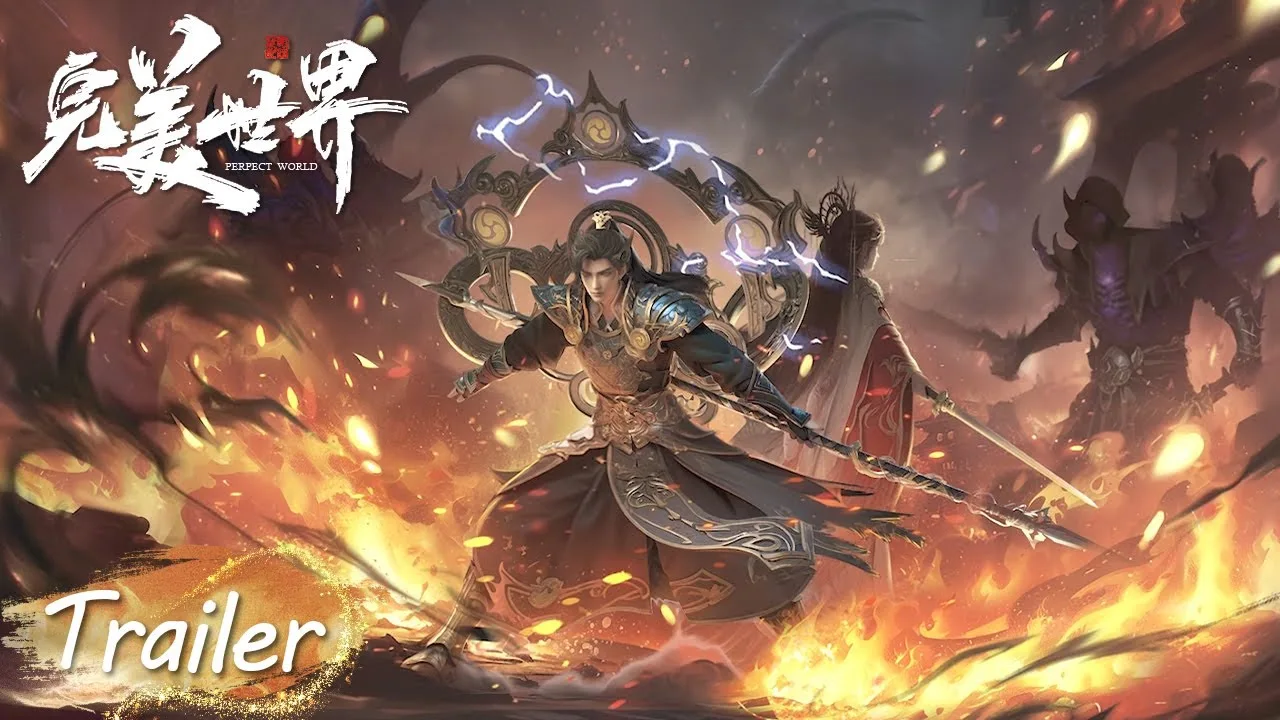
Later battles justify the series’ reputation for spectacle. The strongest sequences establish terrain and distance before releasing the largest techniques, allowing speed to feel dangerous without losing all sense of direction. Creature scale and architecture are especially effective because the camera can travel through spaces that would be difficult to sustain in a weekly 2D production.
Effects still overwhelm choreography in weaker fights. When several attacks become glowing collisions, power is visible but strategy is not. Perfect World works best when the spectacle clarifies a physical problem—distance, size, pursuit or survival—instead of using brightness as a substitute for action design.
Supporting characters and romance
Liu Shen, Shi Hao’s family and the relationships formed around Stone Village give the story its strongest emotional memory. Their importance survives long stretches away because they belong to the part of Shi Hao’s life that was allowed to feel grounded. Later returns work best when they reconnect his expanding power to that earlier sense of responsibility.
Huo Ling’er and Yun Xi are meaningful presences, but romance is secondary to cultivation and conflict. Long separations make development intermittent, and the adaptation often moves on just as a relationship begins to regain emotional texture. Anyone choosing Perfect World mainly for romance should adjust expectations: affection matters, but it rarely controls the narrative rhythm.
Other supporting characters frequently arrive with striking designs and a clear immediate function, then recede as Shi Hao enters another realm. This keeps the world populated but weakens continuity. The donghua becomes genuinely moving when it slows down for loyalty, family or sacrifice; it simply does not slow down often enough.
Does Perfect World get better?
Visually, yes. The difference between the rougher opening and the more assured later production is large enough to reward patience. Environments, models and showcase battles all improve, and Shi Hao eventually looks at home inside the mythic scale the story has promised from the beginning.
As a piece of storytelling, the answer is more qualified. Perfect World becomes grander, but it does not become much more patient. Dense terminology, fast transitions and uneven supporting-character continuity remain part of the experience. Someone bothered mainly by early CG should continue; someone unable to connect with the compressed narration should not expect a different kind of series to emerge later.
Is the long commitment worthwhile?
Perfect World is easier to recommend as an ongoing world than as a project to finish. It suits viewers who enjoy returning to a cultivation journey, absorbing a few arcs and taking a break. It is a poor match for anyone who needs a completed story or wants every faction and power level explained before the next conflict begins.
Skipping the opening is not a good solution. Those episodes are visually weaker, but Stone Village, Shi Hao’s formative losses and his earliest bonds supply context that later spectacle assumes. A fair test is to finish the first substantial movement and decide whether Shi Hao’s personality and the discovery-driven pacing are enough to carry you. Later polish strengthens those qualities; it does not replace them.
Where to watch and a subtitle warning
Check the official WeTV series page for the current episode list, subtitle options and availability in your region. Free access and release timing can vary by territory.
Use one official subtitle edition consistently. Names, ranks and locations may be translated differently across releases, and changing terminology midway makes an already compressed story more confusing. A restrained character or realm guide can help, but avoid late-arc searches if you want to stay spoiler-free.
How it compares with other cultivation donghua
Perfect World is the scale-first recommendation. Battle Through the Heavens offers a clearer comeback structure, Soul Land makes teams and abilities easier to track, and Renegade Immortal gives consequences more influence over its protagonist. Perfect World distinguishes itself by refusing to stop widening the horizon around Shi Hao.
Choose it when visual escalation and constant discovery are the attraction. For alternatives, use our cultivation donghua guide, or compare our Soul Land review when clearer abilities and team continuity matter more.
Who should watch it?
- Watch if you enjoy cultivation ranks, ancient inheritances and worlds that keep expanding.
- Watch if an assertive, increasingly powerful protagonist is a feature rather than a source of reduced suspense.
- Watch if improving 3D spectacle matters more than patient exposition or sustained romance.
- Start elsewhere if this is your first cultivation story and unfamiliar terminology quickly becomes tiring.
- Wait if you only invest in completed stories: the donghua is still ongoing.
Final verdict
Perfect World is an impressive long-form spectacle and an uneven adaptation. Its best images make cultivation feel genuinely mythic, and Shi Hao has enough personality to keep the endless climb from becoming anonymous. The visual growth is real, as is the pleasure of seeing a once-small world unfold into something cosmic.
What holds it back is not a lack of story but a lack of room. Context, relationships and consequences are often rushed so that the next realm can arrive. An 8.2/10 recognizes how consistently the donghua delivers momentum, scale and visual payoff while leaving room for its real problems with clarity and ensemble depth. Perfect World knows how to look vast. It is less consistent at making that vastness feel intimate.
Frequently asked questions
Is the Perfect World donghua completed?
No. The donghua is ongoing on WeTV. It is a better choice for viewers happy to follow a long cultivation journey than for those looking for a finished series to binge.
Is Perfect World worth watching?
Yes if you enjoy long cultivation journeys, powerful protagonists and increasingly polished 3D battles. It is less suitable if you need a finished story, consistently clear lore or a romance-led plot.
Does Perfect World improve after the beginning?
Its visual production improves substantially, especially in environments and large battles. The rapid narration and dense terminology remain, so the storytelling does not transform as completely as the animation.
Do I need to read the novel first?
No. The main journey is understandable without it, although novel context or a concise terminology guide can clarify ranks, factions and transitions that the donghua handles quickly.
Can I skip the early episodes?
It is not recommended. The opening establishes Stone Village, Shi Hao’s family history and relationships that continue to give the later story emotional context.
Sources and verification
- WeTV — primary source
Official platform · accessed 24 Aug 2026 - Tencent Video Animation
Official platform · accessed 24 Aug 2026