Verdict
Fog Hill of Five Elements is easy to recommend and difficult to describe without overpraising its surface. The animation really is exceptional: lines flare, dry brush textures become impact effects, and bodies travel through space with a clarity that many larger productions lose. Yet the series is not a complete victory. Its short run carries a dense cosmology, several factions and a creature conflict at sprinting speed.
The result is best treated as a compact action myth. Viewers who prioritize movement, design and atmosphere will find scenes worth replaying. Viewers who need a patient emotional arc may finish impressed but not deeply attached.
Review scope and quick facts
- Scope: the seven released main episodes listed by Bilibili, including the later continuation episodes.
- Format: Chinese 2D animated fantasy series; original language Mandarin.
- Spoiler policy: premise and structural discussion only; no late-fight outcomes.
- Best for: animation enthusiasts, martial-arts fantasy viewers and anyone wanting a short donghua entry point.
- Skip if: unexplained terminology or deliberately compressed character writing quickly breaks immersion.
A premise built for immediate conflict
Elemental warriors guard the boundary between human settlements and dangerous creatures. A broken seal and competing obligations pull that system into crisis. Fog Hill does not spend long explaining every historical layer before movement begins; it establishes rules through consequences, visual motifs and urgent confrontations.
That choice protects momentum but raises the entry cost. Names, abilities and loyalties arrive faster than a newcomer can comfortably file them. The broad stakes remain understandable—protect people, contain a threat, survive rival agendas—but the finer mythological logic sometimes feels like material from a longer story condensed into annotation-sized dialogue.
Why the animation feels different
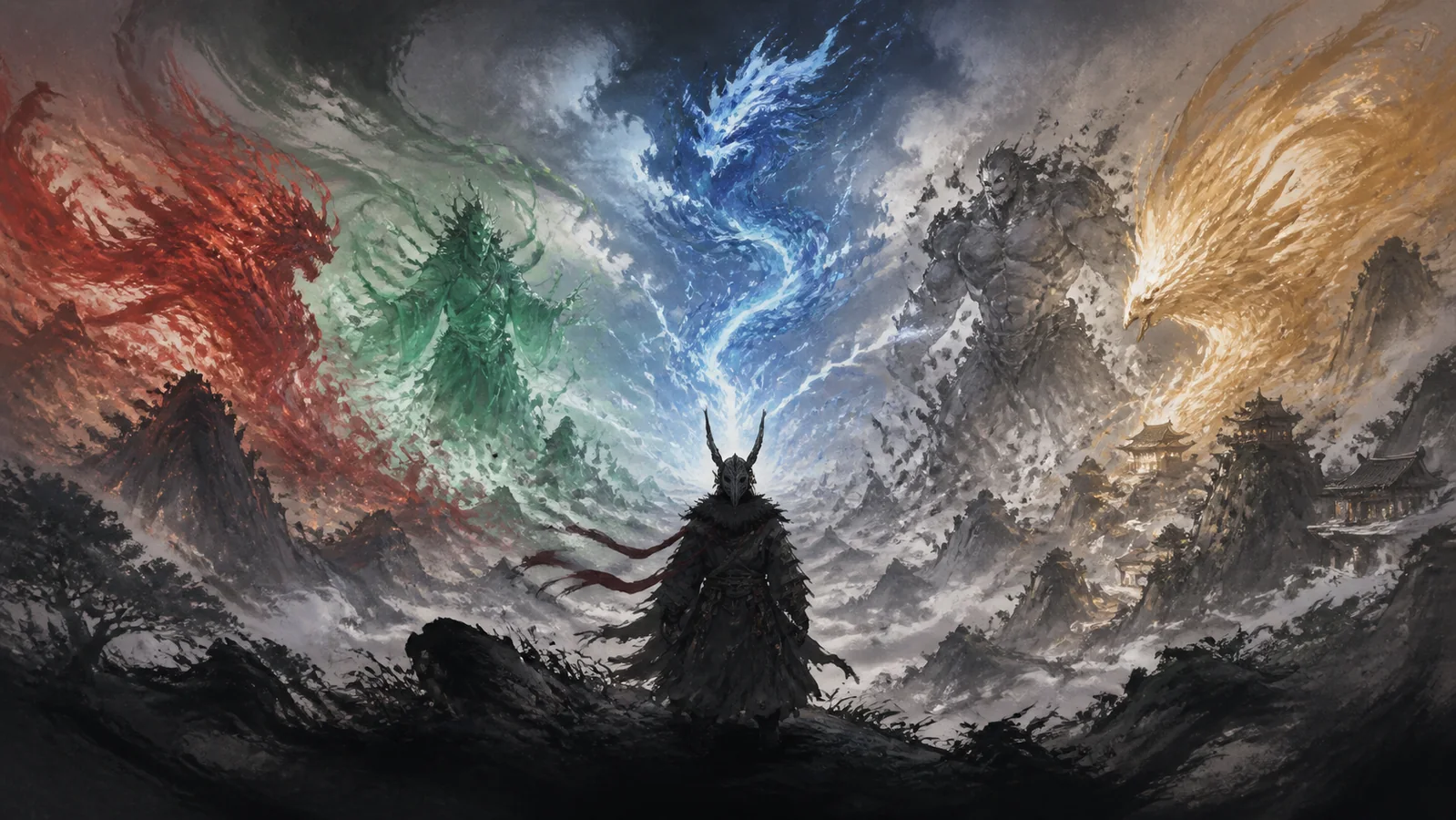
The series does not merely place watercolor textures over ordinary digital action. Brush marks function as motion. A stroke can describe a sleeve, then break apart into elemental debris; a background can flatten into graphic rhythm before depth returns for the next exchange. The visual language allows exaggeration without losing the force of bodies and terrain.
Color is disciplined rather than decorative. Elemental identities remain readable during complex clashes, so spectacle rarely becomes luminous noise. Impact frames sharpen the instant of contact, while quieter poses preserve silhouettes long enough for the eye to understand who is controlling the scene.
Action direction with spatial clarity
The strongest fights have geography. Entrances, obstacles and distances matter; a fighter does not simply teleport between close-ups. The camera may move aggressively, but it usually returns to a readable axis before the next reversal. That makes speed feel earned rather than concealed by cuts.
The choreography also gives techniques a tactical purpose. Elements create routes, close space or alter timing instead of operating only as different colors of force. Even when the narrative context is thin, the action itself tells a small story about initiative, pressure and adaptation.
Story, pacing and character limits
Compression is the central weakness. The plot has enough incident for a longer season but not enough quiet time for the cast to become more than striking roles. Motivations are legible, yet interior conflict often appears immediately before it must power a decision. A short conversation has to carry history that the series has not dramatized.
The characters remain memorable because their designs, movement and fighting styles are specific. They are less memorable as people with changing relationships. This is not fatal to a mythic action piece, but it prevents the drama from matching the animation’s emotional ambition.
Accessibility and subtitles
A basic familiarity with Chinese fantasy vocabulary helps, but knowledge of mythology is not required. What matters more is accepting that the series will not pause for a glossary. Viewers should use one consistent official subtitle edition, because translated names and technique labels can differ across uploads.
Fog Hill is technically a strong beginner recommendation because it is short and visually immediate. It is not the easiest narrative introduction to donghua. Link Click is friendlier for viewers who want modern dialogue and gradual rules; Fog Hill is the better doorway for viewers who communicate with animation before exposition.
Scorecard and final recommendation
- Animation and art direction: exceptional—expressive without sacrificing readability.
- Action staging: excellent—fast, tactical and spatially coherent.
- Story and pacing: uneven—compelling stakes compressed past their ideal rhythm.
- Characters: distinctive on the surface, underdeveloped inside.
- Accessibility: moderate—short runtime, dense terminology.
- Rewatch value: high for visual analysis and choreography.
Fog Hill of Five Elements is worth watching because its craft changes what action animation can feel like, not because every narrative component is equally finished. Approach it as a concentrated work of motion and atmosphere, and its limitations become easier to accept without pretending they disappear.
Where to watch legally
Bilibili lists the completed seven-episode run on its official Chinese service. International availability and subtitle options vary by country, and search results often mix official pages with unauthorized reposts. Verify the uploader and rights information before watching.
Production identity beyond “good animation”
The important achievement is authorship. Fog Hill does not look distinctive because it adds an ink filter to a familiar pipeline; composition, timing and texture appear to originate from the same visual idea. Mountains can be atmosphere in one shot and a physical obstacle in the next. Elemental effects carry the pressure and grain of their material rather than becoming interchangeable beams.
That unity gives limited dialogue more force. Costume edges, stance and the way a fighter enters a frame communicate hierarchy before a subtitle explains it. Production ambition is therefore visible not only in expensive-looking sequences but in the confidence to hold on a shape, leave part of a frame empty or allow rough lines to remain rough.
How to watch without turning it into homework
A first viewing should follow immediate goals and relationships rather than pause for every unfamiliar name. The series repeats its essential visual markers often enough to preserve the main conflict. On a second pass, faction motives and technique choices become easier to organize because the action geography is already familiar.
Avoid lore videos before finishing. Many use late images in thumbnails or explain mysteries the episodes deliberately withhold. An official synopsis and consistent subtitle track provide enough preparation. The series is short enough that rewatching one dense episode is more useful than importing a large mythology glossary from outside the work.
Frequently asked questions
Is Fog Hill of Five Elements anime or donghua?
It is donghua: animation produced in China. “Anime” is sometimes used broadly by viewers, but donghua is the more precise origin label.
Is the series finished?
Bilibili currently labels the seven main episodes as completed. That describes the available run, not a guarantee that the creative world can never receive another project.
Do I need to know Chinese mythology first?
No. Familiarity helps with genre expectations, but the immediate conflict is understandable from the series itself. Consistent subtitles matter more than outside lore study.
Official sources
- Bilibili — primary source
Platform · accessed 24 Aug 2026