Marriage of Convenience is worth trying if you like a second-chance heroine who begins with an unromantic priority: not ending up powerless again. Bianca knows her first life went badly. Her new plan starts with security, reputation and turning a distant husband into someone she can rely on. The romance becomes interesting because those practical concerns do not disappear when attraction enters the picture.
The main reservation is just as important. Bianca and Zachary's marriage comes with a troubling age and power imbalance, including a childhood-marriage backstory. If that makes the central relationship impossible for you to enjoy, attractive art and later affection are unlikely to solve the problem.
This is the manhwa based on KEN's story, adapted by Hanheun with art by Antstudio. It follows Bianca and Zachary—not simply any romance built around a marriage-of-convenience trope. This review focuses on the opening and early relationship, with setup spoilers but no assessment or reveal of the ending.
Bianca gets another life, not an instant new personality
Bianca's first life ends in misery. Given a chance to return to her younger self, she decides that repeating her old relationship with Zachary is not an option. A husband she previously kept at a distance needs to become an ally.
That is a stronger starting point than “she knows the future, so she wins.” Information gives her a reason to behave differently; it does not instantly make her kind, tactful or emotionally secure. Her determination can still come out as pride. She has to change how she deals with people, not merely announce a different plan.
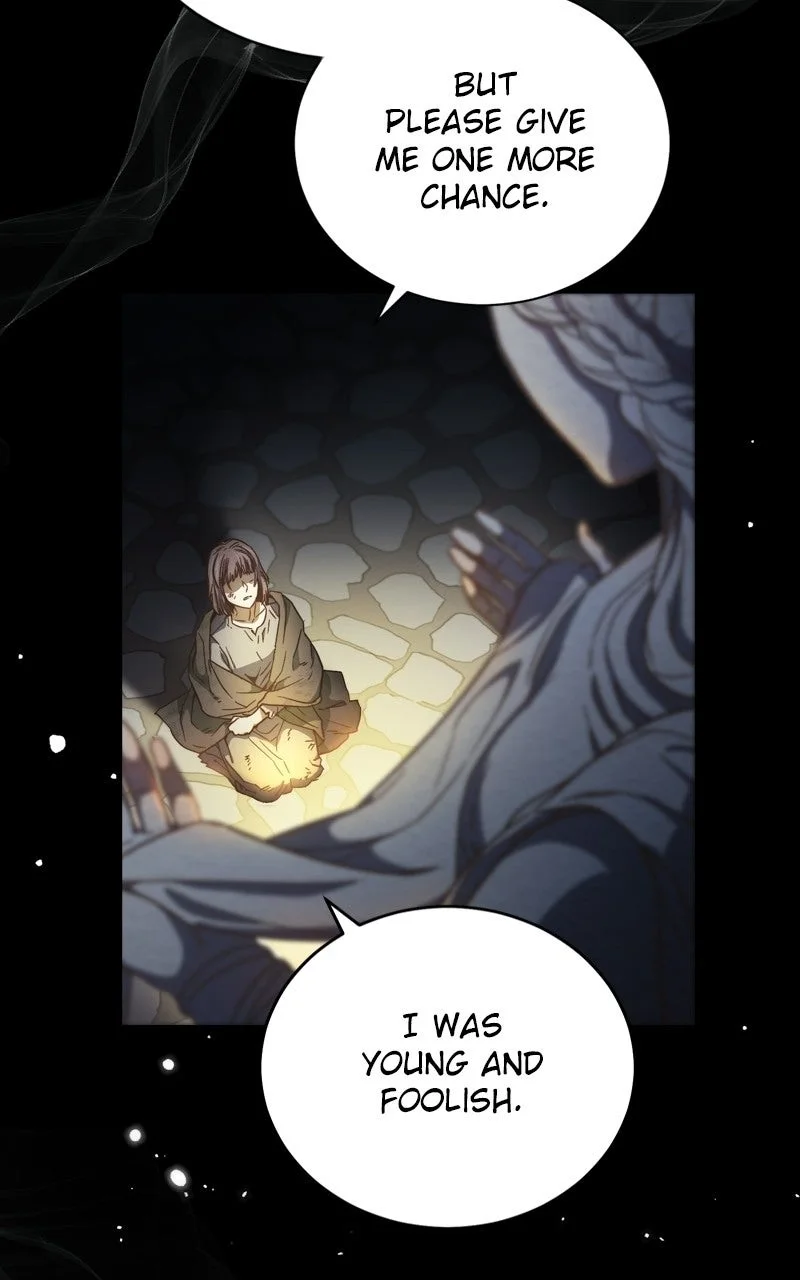
The opening's bleakness helps explain that urgency. Bianca kneels before a religious statue and pleads for another chance, reduced to admitting what she got wrong. That is a very different introduction from a glamorous heroine confidently announcing her next move. She is afraid of returning to an outcome she has already endured.
That makes her a useful fit for readers who enjoy imperfect heroines. It is less appealing if you want the story to establish immediately that its lead has never done anything wrong. The point of a second chance loses force if there is nothing meaningful for the character to reconsider.
The marriage matters because it is also an arrangement
Bianca's position depends on more than whether Zachary finds her attractive. Marriage determines whose household she belongs to, what protection she has and how others treat her. The romance gains weight when those conditions remain visible.
This is why practical conversations can be more revealing than a glamorous encounter. A change in how Bianca approaches her husband also changes what she can ask, what she risks admitting and how much control she feels she has over her future. Affection is not happening outside the social structure; it is developing inside it.
The fantasy is still a fantasy. You should not expect a rigorous reconstruction of medieval law or a romance whose problems can all be solved with modern expectations. But the setting gives the relationship a useful constraint: these people cannot treat marriage as something they can casually walk away from after a bad conversation.
The title earns its place when you can feel that constraint. A marriage that begins as a transaction has to become something more without pretending it was freely chosen on equal terms from the beginning.
Does the Bianca–Zachary romance work?
Its appeal comes from the mismatch between what they intend and what they manage to communicate. Bianca's attempt to secure her future can sound far more calculating than the fear behind it. Zachary's reserve can leave space for her to imagine rejection, even when his behavior is not as simple as indifference.
That gives small adjustments a purpose. A different response, a willingness to stay in the conversation or a moment of visible awkwardness can suggest movement without requiring a dramatic confession every chapter. If you enjoy watching a formal relationship become personal, there is a clear reason to keep reading.
But misunderstanding is not automatically depth. When both characters could clarify something and repeatedly fail to do so, the same mechanism that created tension can start to feel like delay. Your tolerance for that rhythm will matter as much as your interest in the couple.
The age gap deserves its own consideration, not a vague “historical setting” disclaimer. Bianca's childhood marriage places her in a relationship she could not enter on equal terms. A second life and a more forceful personality do not erase that backstory. Readers should be able to decide whether the premise is acceptable to them before investing in the romance.
Antstudio's art makes the distance visible
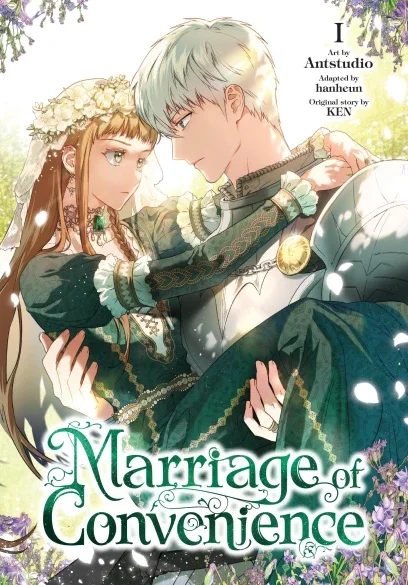
The ornate costumes and careful presentation of the couple are a substantial part of the appeal. The first-volume cover surrounds an intimate pose with formal dress and floral detail. It sells closeness while keeping their social world in view: this is not a romance detached from wealth, appearance and rank.
The opening gives that beauty a harsher counterpoint. In the image above, Bianca is viewed from high above, small against the statue and dressed without the cover's finery. Her posture makes the plea feel exposed. The contrast gives you a visual reason to understand her fear of losing her position, rather than leaving all that work to the narration.
If elaborate historical-fantasy clothing is one of your pleasures in manhwa, this is an easy series to sample visually. If you prefer spare pages and very brisk movement, the emphasis on presentation may feel like part of the slower pace.
Is Marriage of Convenience completed?
Tapas marks its English comic release as completed. WEBTOON also carries the Bianca–Zachary adaptation but has its own release schedule. Those labels can differ without referring to different plots or proving that one page is wrong.
Check the specific edition you plan to read. A completed listing does not necessarily mean every episode is free, and a newer platform's weekly schedule does not necessarily mean the original story is unfinished. Chapter totals can also vary when platforms count extras or split installments differently.
For print, Yen Press publishes the comic with the same core creator credits: Antstudio, Hanheun and KEN. Matching both the creators and the character names is safer than choosing solely by the English title, since marriage of convenience is also a very common romance phrase.
Is it a good first historical-romance manhwa?
It can be, if the second-chance hook appeals to you and you are comfortable with a morally complicated starting relationship. You do not need a glossary to understand Bianca's immediate goal. She wants her next life to end differently, and changing her marriage is part of that plan.
Expect discussions of death, a childhood-marriage backstory, unequal power and mature relationship material. WEBTOON rates its edition Young Adult (16+); check the rating of your chosen release rather than assuming all editions present intimacy in the same way. This is not a gentle, uncomplicated love story.
For a broader range of relationship setups, our romance manhwa guide is a better place to compare options.
Final recommendation
Read Marriage of Convenience for an imperfect heroine, a practical motive behind the romance and art that makes its aristocratic setting feel important. The early premise has more interest when Bianca is allowed to be defensive and difficult than it would if her second chance simply made her flawless.
Pass if childhood marriage, a substantial power imbalance or drawn-out misunderstandings are firm limits for you. Those reservations belong alongside the recommendation. The attractive part of this story is watching an arrangement change; whether you want to follow that change depends on how you feel about where it begins.