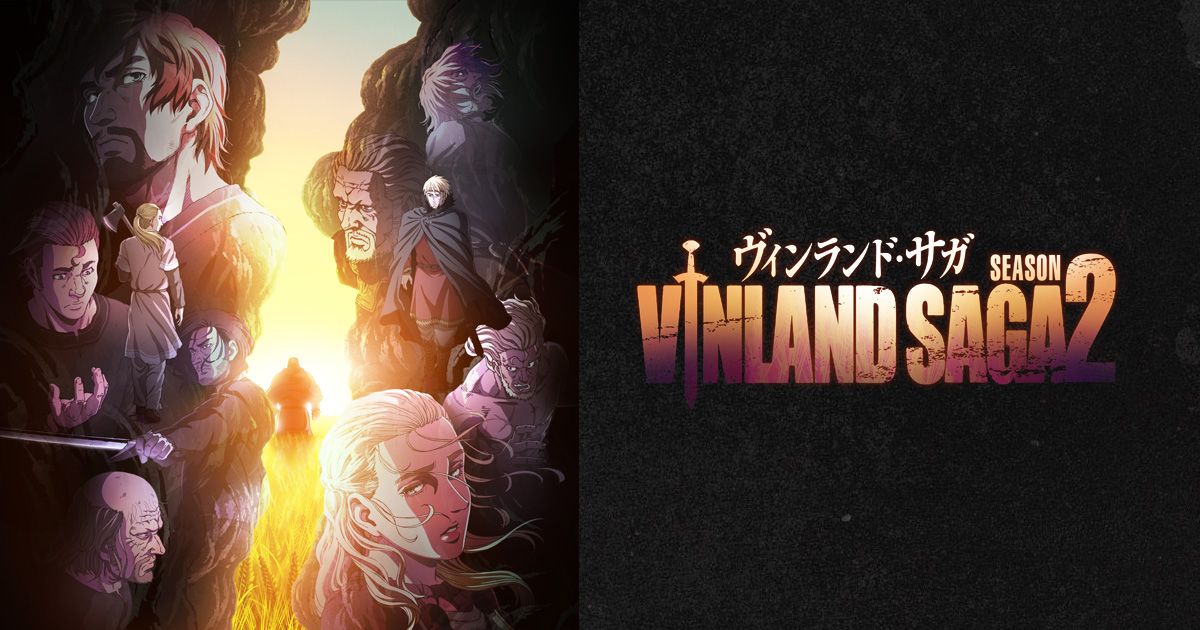
A revenge story with somewhere harder to go
Thorfinn is very good at the thing that is consuming his life. He can survive among mercenaries, close the distance on a larger opponent and make himself useful in a violent world. None of that tells him what a life outside revenge might look like.
That gap is what makes Vinland Saga worth watching. The Viking setting supplies battles, political maneuvering and imposing personalities, but Makoto Yukimura’s story is most interesting when it asks what all that strength has actually given its protagonist. Becoming a better fighter is a clear goal. Becoming someone who can live differently is much less straightforward.
The anime changes pace substantially as it follows that question. The second season’s farm setting is not a brief interruption before the real story returns to the battlefield. It is an essential part of the story. Knowing that before you begin makes for a fairer choice than expecting an uninterrupted war adventure.
Thorfinn’s anger is easy to understand and difficult company
Revenge makes a powerful organizing principle because it gives Thorfinn an immediate objective. It also makes his world painfully small. Askeladd matters so much to him that almost every other possibility has to compete with that fixation. The young man can act decisively in a fight while remaining trapped in the same emotional position.
This is a compelling distinction between an effective protagonist and an admirable one. You can understand Thorfinn without wanting to imitate him. His ability is exciting, but his dependence on the pursuit is not presented as a healthy form of freedom.
It can still be frustrating to spend time with that anger. The early story repeatedly returns to his hostility, and other characters sometimes have a wider range of things to think about. If you need a lead who communicates easily or becomes likable immediately, he may be difficult company. The value is in what the narrative eventually does with that limitation, not in pretending it is never tiring.
Askeladd makes every alliance uncertain
Askeladd’s bargain during the Frankish siege makes his priorities unusually clear: the army he assists can have the victory, while his men take the treasure. He can cooperate enthusiastically without sharing anyone else’s cause. Watching him identify what another person wants is often as suspenseful as watching a duel, because agreement does not make him trustworthy.
His relationship with Thorfinn is especially uncomfortable because proximity is not the same as trust. The younger fighter’s determination keeps him tied to someone he hates. Their shared scenes can carry dependence, manipulation and recognition without settling into a reassuring mentor relationship.
Canute offers a less swaggering introduction to power. The young prince initially relies on Ragnar as a buffer against the people around him, yet a scene in which Thorfinn eats his cooking lets an ordinary ability emerge from behind the royal position. That quieter contact gives him a personality beyond being someone important whom other men want to control.
Their presence widens the appeal beyond Thorfinn’s grievance. One person knows how to make a room serve him; another has to find a voice inside it. The political story becomes easier to care about when status and confidence are so visibly different things.
The farm arc is the point, not a detour
Season two changes the daily shape of Thorfinn’s life. Work, dependence and the possibility of a future take up space once occupied by the next confrontation. The farm is quieter than the battlefield, but it is not free of coercion. People still have unequal power over one another, and the ability to leave is not something everyone possesses.
The change of setting makes the central problem harder to avoid. In a battle, Thorfinn knows what his body can do. Building a life requires skills that violence has not taught him. Working alongside another person, accepting help and deciding what to do with anger are less spectacular tasks, but they are not easy ones.
Skipping the farm material would remove the consequences of the earlier story. Thorfinn has to discover what he can contribute when fighting is no longer an adequate answer. The quieter setting makes that question harder for him to escape.
The pacing is a legitimate hurdle. The second season gives conversations and emotional states far more room, and its movement can feel slow if the warfare was your main source of enjoyment. This is a change in what the series asks you to attend to, not a promise that more action is always just around the corner.
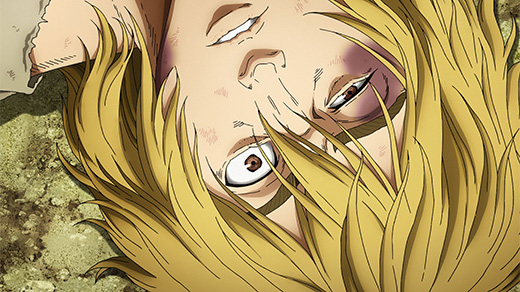
Einar makes recovery more than an individual achievement
Einar has been harmed by war too, but he is not simply another version of Thorfinn. His anger, practical knowledge and willingness to engage with other people give the relationship a productive imbalance. Each brings something the other cannot supply by withdrawing into himself.
Their shared work is particularly important. A conversation about starting over can sound persuasive for a moment. Having to return to a task together gives that possibility a routine. Progress is something they must participate in, not something a speech can grant them once and for all.
The friendship also complicates an easy idea of forgiveness. Einar’s feelings matter in their own right. The story cannot become convincing merely by asking someone harmed by violence to be endlessly understanding toward someone else. The interest lies in how anger and kindness can exist in the same person without either being dismissed.
Arnheid and the other people on the farm keep the setting from belonging only to the two men. Their situations make clear that a private change of heart does not automatically remove the power another person holds over a life. Thorfinn’s development matters, but it takes place among people who need more than his development to be safe.
Strength looks different when the face stays in view
Thorfinn’s anger is easy to recognize. His exhaustion and growing uncertainty demand closer attention. On the farm, a change in expression or a willingness to keep listening can matter more than an aggressive response. The adaptation gives that less demonstrative struggle a place beside the earlier physical one.
WIT STUDIO produced the first season and MAPPA produced the second, with director Shuhei Yabuta continuing across both. The change of studio is less useful as a viewing criterion than the change in dramatic emphasis. One stage of the story demands the energy of war; another needs to make stillness, work and difficult conversation hold the screen.
The dreams bring that inward struggle into harsher focus. What Thorfinn carries does not disappear when the surroundings become quieter. Those passages keep the farm from feeling like a clean reset: a different daily routine is possible, but it has to coexist with what he cannot simply leave behind.

Where Vinland Saga is less convincing
The series sometimes states its ideas more insistently than it needs to. A philosophical conversation can clarify a character’s position, but several such moments close together may feel like being guided toward a conclusion the drama has already made understandable. The quieter proof of a changed habit is often more persuasive.
Its historical setting also coexists with exaggerated physical feats. This is historical fiction with an expressive approach to warriors and combat, not a documentary reconstruction. Viewers looking for strict realism may find the scale of some action at odds with the gravity of the surrounding story.
There is a further tension in the treatment of suffering. The story wants violence to have weight, and that weight can be severe. At times the accumulation of cruelty risks leaving less room for a person’s life beyond what has been done to them. The strongest relationships resist that reduction by allowing work, affection and ordinary wants to matter too.
Where to begin
Watch the first season before the second. The later material relies on understanding Thorfinn’s earlier priorities, even though it changes the kind of drama around him. Neither a compilation of fights nor a collection of his best-known speeches replaces that progression.
One place to check is Crunchyroll. Confirm that your regional catalogue includes both seasons and the language version you want before paying for access.
No background reading about Viking history is required. The immediate relationships and conflicts provide a way into the setting. A little historical curiosity may enrich the experience, but keeping track of every name or political reference should not become homework before the characters can matter.
Expect strong violence, slavery, abuse and sustained distress. This can be an absorbing series without being a relaxing one. It is a better recommendation for someone prepared for difficult character drama than someone seeking uncomplicated escapism.
The verdict
Vinland Saga earns attention by asking its hero for something harder than another victory. The early rivalry has force, but the shift toward work, friendship and responsibility gives that force a purpose beyond spectacle. Einar’s presence is especially valuable because change becomes something tested in a relationship, not simply announced inside Thorfinn’s head.
Choose it for that developing perspective. Be cautious if you want the same pace and type of excitement throughout. Its strongest reward is seeing the question of what makes a formidable warrior give way to the more difficult question of what makes a life worth building.
Questions before you start
Is Vinland Saga based on real history?
It draws on historical settings and figures, but its characters, dialogue and dramatic events should be treated as historical fiction. The anime is telling a character story, not presenting every scene as a verified historical event.
Does season two stop having conflict?
No. It reduces the emphasis on continuous warfare and gives more attention to work, relationships, coercion and the effects of violence. The tension changes form; it does not disappear.
Does the anime tell the complete manga story?
No. The animated seasons do not cover the whole manga. They offer important developments in Thorfinn’s journey, but the larger story extends beyond them.