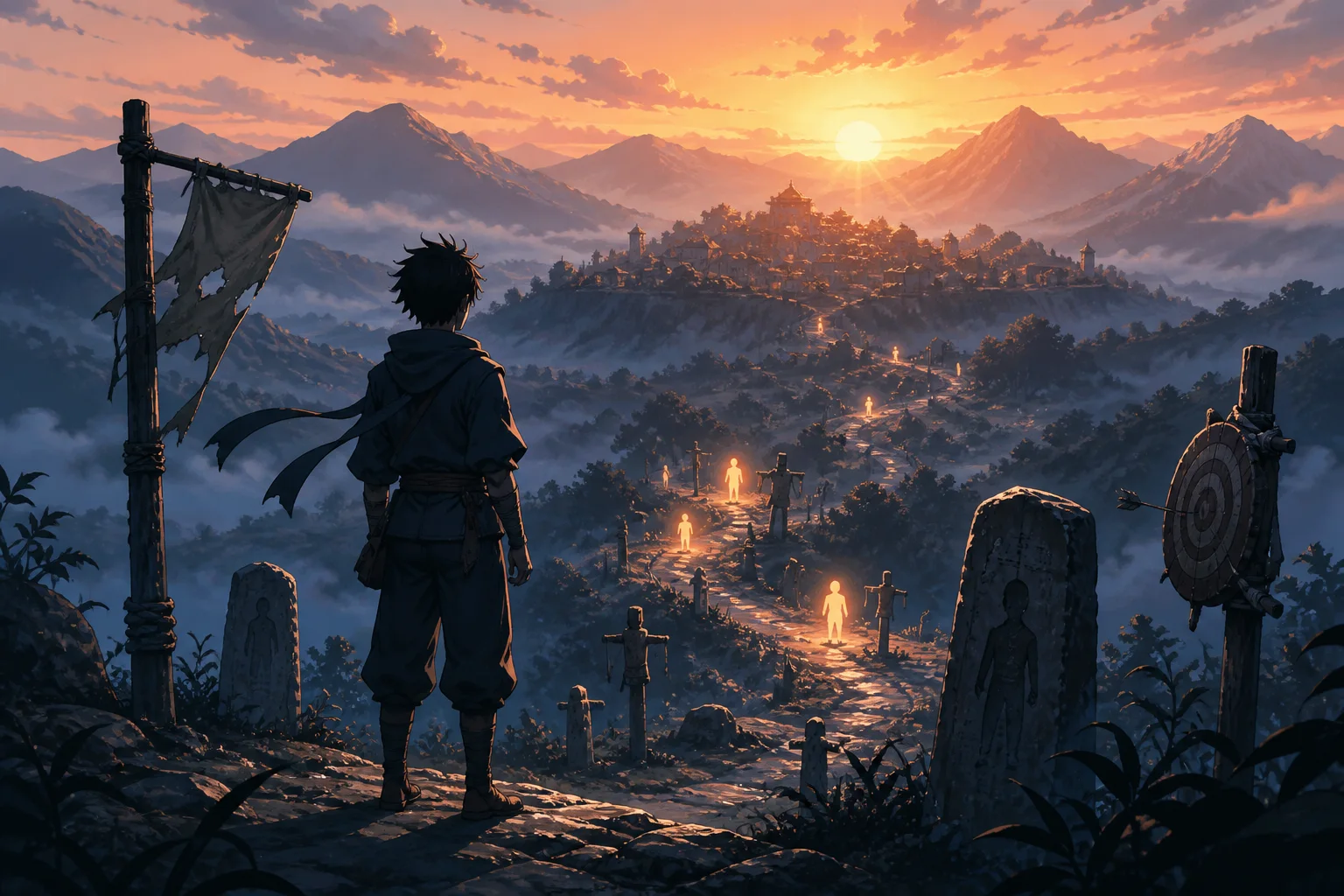
Scope of this review
This review covers the original Naruto television series and Naruto Shippuden as one long coming-of-age story. It does not review Boruto, the films or every anime-original side arc. That distinction matters because “Is Naruto worth watching?” usually means two different questions: whether the core story is good, and whether the broadcast version is worth following without a viewing plan.
Verdict: the emotional core survives the bloat
At its best, Naruto is not a fantasy about becoming the strongest person in a village. It is a story about a child who performs confidence because being noticed—even negatively—feels safer than being ignored. His loud ambition gives the series a simple forward drive, while his encounters with rivals, teachers and enemies keep asking what recognition should cost.
That sincerity is the reason the anime remains easy to recommend with conditions. Its strongest arcs connect ability to experience: a technique can reveal patience, fear, family pressure or a dangerous idea about talent. The weaker material stretches those ideas through recaps, repeated flashbacks and anime-original detours that interrupt urgency.
For shorter series with similarly consequential fights, compare our action anime recommendations. Naruto is the larger emotional commitment, not the quickest entry point.
Naruto at a glance
| Question | Answer |
|---|---|
| Best quality | Long character arcs built around loneliness, mentorship and chosen bonds |
| Biggest weakness | Filler, flashbacks and repetition distort the pace |
| Fight style | Tactical early battles; larger spectacle later |
| Scope | Original Naruto and Naruto Shippuden |
| Best for | Viewers who want a long emotional action saga |
Why the early ninja battles still work
The early fights are memorable because information matters. Characters enter with limited tools, discover one another’s habits and improvise under pressure. A victory can come from misdirection, teamwork or understanding the emotional weakness behind a technique. Even when the power system expands, those early battles teach the audience to look for intention rather than count explosions.
Later arcs increase scale and sometimes lose that compact tactical clarity. The best large confrontations still work because they resolve relationships or beliefs established long before the final attack. The least effective ones treat escalation as its own reward, adding explanation after explanation until the human conflict feels distant.
The real strength is accumulated character history
Naruto and Sasuke carry the central contrast, but mentorship gives the world its emotional depth. Teachers are not merely delivery systems for techniques; they inherit failures and pass on partial answers. That generational structure lets the story examine how institutions reproduce grief while individuals attempt to interrupt it.
The series is much weaker with many of its women. Sakura receives meaningful moments and important responsibilities, yet her writing repeatedly narrows back toward romantic fixation or comparison with the male leads. Other women are introduced with strong premises but receive less interior development than similarly placed men. The gap becomes harder to ignore as the story asks to be judged as a broad generational epic.
Filler and pacing: how to watch without burning out
The broadcast anime contains long anime-original stretches, and Shippuden often repeats recent material inside episodes. Watching every release in order is valid if you enjoy living in the world, but it is not the only honest way to experience the core narrative. New viewers should decide in advance whether they want the complete television archive or the manga-adapted path.
- Use a clearly labeled filler guide rather than skipping scenes at random.
- Keep mixed canon/anime-original episodes when they conclude an arc you are already watching.
- Take breaks between major sagas; the story was built for weekly viewing, not one continuous binge.
- Do not expect every anime-original arc to affect later character decisions.
Animation and sound
Naruto’s television production is uneven by design and circumstance. Routine episodes conserve movement, while major fights receive distinctive animators, looser drawings and more expressive timing. Viewers who equate detail with quality may initially find some celebrated sequences strange, but their motion communicates weight and emotion more effectively than perfectly still character sheets.
Music does a large amount of emotional work without feeling interchangeable. Themes for solitude, determination and danger establish memory across hundreds of episodes. The risk is repetition: the anime sometimes leans on familiar music and flashbacks to manufacture a feeling the scene has not freshly earned.
Who should watch Naruto?
- Watch if you enjoy long-form character growth and relationships that change across years.
- Watch if training, rivalry and mentorship matter as much as the final power level.
- Use a filler plan if pacing strongly affects your enjoyment.
- Skip if you need consistently concise storytelling or equal development across the ensemble.
- Choose a shorter action series first if hundreds of episodes feel like obligation rather than opportunity.
Frequently asked questions
Should I watch Naruto before Naruto Shippuden?
Yes. Shippuden assumes the relationships, rivalries and village history built in the original series. Starting later reduces many emotional payoffs to exposition.
Can I skip Naruto filler?
You can skip most fully anime-original arcs without losing the central manga story. Mixed episodes need more care because they may contain canon scenes alongside expanded material.
Is Naruto a good first anime?
It can be, provided the length is exciting rather than intimidating. If you want to test your preferences first, browse the Anime Guides hub and begin with a shorter genre match.
Sources and verification
- VIZ Media — primary source
Official publisher · accessed 25 Aug 2026