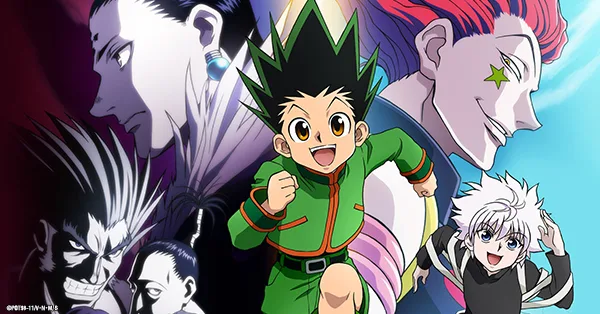
Verdict
Hunter x Hunter earns its reputation by refusing to become the same show for 148 episodes. An exam adventure becomes a family rescue, an arena lesson, a criminal ensemble thriller, a game and eventually a war that questions the categories of human and monster. The transitions feel bold because Gon and Killua provide continuity without remaining psychologically static.
The bright surface can mislead viewers into expecting uncomplicated optimism. Gon’s determination is admirable when it resists fear and alarming when it rejects limits imposed by other people’s safety. The anime lets that contradiction grow rather than correcting it with a single lesson.
Scope and quick facts
- Scope: Madhouse’s 2011 television adaptation, 148 episodes.
- Spoilers: setup and arc-level discussion only; no major deaths or final outcomes.
- Best for: long adventure, strategic combat and friendships allowed to become complicated.
- Important: the anime reaches a meaningful stopping point, not the end of the ongoing manga world.
Gon and Killua make the scale personal
Gon’s search for Ging gives the journey direction without forcing every arc to be another clue. Killua enters with far more practical knowledge and far less freedom. Their friendship works because each supplies what the other lacks, then gradually exposes the danger in that arrangement.
Supporting characters disappear for long stretches, which can frustrate viewers attached to Kurapika or Leorio. The benefit is that the world feels larger than one permanent party. The cost is emotional interruption when an arc’s favorite ensemble gives way to another.
Why Nen works
Nen begins with categories and becomes a language for intention. Conditions, vows and limitations convert personality into tactical possibility. A weaker fighter can matter by understanding information, while a powerful fighter can lose by misunderstanding what an ability requires.
Explanations are substantial, but usually pay off because the audience can follow a decision instead of waiting for a surprise transformation. Nen becomes less interesting only when viewers reduce it back into online rankings that the story itself keeps complicating.
Arc variety and Chimera Ant pacing
Yorknew City is compact, urban and driven by competing objectives. Greed Island is rule-heavy and playful. Chimera Ant expands until individual battles become questions about species, governance and empathy. This variety is the series’ defining strength.
Chimera Ant is also the patience test. Narration slows moments to reveal parallel decisions, and the invasion stretches seconds across episodes. For some viewers that is the point: consequence is being examined under pressure. For others it will feel like a refusal to move. Neither response should be dismissed.
Animation and adaptation ending
Madhouse maintains unusually consistent character readability across a long run. Direction becomes more expressive when tone darkens, while the score helps arcs feel distinct. The clean early palette should not be mistaken for an absence of violence.
The final television stretch answers Gon’s opening journey well enough to function as an ending. VIZ’s official hub makes clear that the manga continues beyond the anime material. Viewers can stop satisfied or move to the manga knowing a much larger story remains unfinished.
Who should watch it?
- Watch if you want battle strategy tied to character psychology.
- Watch if genre changes feel exciting rather than inconsistent.
- Prepare for a deliberately slow major arc and long absences from favorite characters.
- Skip if an unfinished wider narrative makes any partial conclusion unsatisfying.
Why the arcs feel like different genres
Hunter x Hunter treats each destination as permission to rebuild its storytelling rules. The exam is an adventure and social test; Yorknew becomes a criminal pursuit; Greed Island turns rule learning into play; the Chimera Ant arc stretches into war, ecology and moral exhaustion. Continuity comes from character choices and Nen, not one repeated mission format.
That variety is a strength only if the viewer accepts tonal reset. A favorite supporting cast can disappear for an arc, and an apparent side concern can become the new center. The series rewards curiosity about structure more than loyalty to a single genre promise.
Nen works because information has a cost
Nen is praised for rules, but the important feature is how characters reveal those rules. Explaining an ability can strengthen it, concealment can create risk, and a clever restriction says something about what the user is willing to sacrifice. Battles become contests over inference before they become contests over force.
The anime occasionally pauses for dense explanation, especially when several abilities interact. Those pauses are not always elegant, but removing them would turn later outcomes into arbitrary reversals. Viewers who dislike tactical narration may prefer the emotional arcs while still finding the combat unusually demanding.
Gon is not a simple moral hero
Gon’s openness makes strangers trust him, yet the same directness can become frightening when reality refuses the bargain he expected. He is compassionate toward people he meets and strangely selective about systems of violence around him. The story observes that contradiction instead of repairing it into conventional goodness.
Killua gives the friendship another direction. His growth is not about becoming strong enough to keep up; it is about recognizing when fear and conditioning are making choices for him. Their bond is joyful, unequal and sometimes unhealthy, which is why later separation carries more than adventure-series sentiment.
The 148-episode stopping point
The 2011 anime ends at a meaningful emotional destination rather than the end of the entire manga. A viewer can stop there without receiving a cliffhanger disguised as a conclusion. Important world questions and other characters continue beyond it, but Gon’s immediate journey reaches a point of reflection.
That makes the anime easier to recommend than the word “unfinished” suggests. Continue with the manga if the wider expedition and unresolved cast matter to you. Do not rush into later chapters solely because completion anxiety prevents you from appreciating where the adaptation deliberately stops.
Why Chimera Ant pacing divides viewers
The Chimera Ant arc slows time because action alone cannot hold its argument. Narration enters decisions, parallel locations and moments that last seconds inside the story. That method can produce extraordinary moral clarity, but it also interrupts the immediacy viewers expect from a siege or tournament.
Calling the arc either a masterpiece or unbearably slow skips the useful distinction. Its pacing is deliberate, yet deliberateness does not guarantee every viewer will enjoy it. If interior consequence and structural comparison matter to you, the accumulation pays off. If narration during action breaks engagement, its most praised episodes may still feel remote.
Supporting characters and selective return
Kurapika and Leorio are introduced as foundational companions, then the series allows entire arcs to proceed without them. This is a consequence of the story following objectives instead of maintaining a permanent party. It makes the world feel independent and can frustrate viewers attached to the original group.
The trade-off is focus. Yorknew can belong deeply to Kurapika because Gon does not have to remain the answer to every conflict. Leorio receives less equivalent material in the adaptation, a genuine imbalance rather than a secret promise viewers should ignore. Hunter x Hunter’s ensemble is broad, but not evenly served.
Frequently asked questions
Which Hunter x Hunter anime should I watch?
The 2011 series is the most practical modern starting point and covers substantially more material. The 1999 adaptation is a distinct production worth exploring later, not a required prequel.
Is Hunter x Hunter finished?
The 2011 anime is complete at 148 episodes and has a meaningful stop. The manga story continues beyond it.
Is it appropriate for children?
The opening appears light, but later arcs contain graphic violence, abuse and sustained moral darkness. Use content sensitivity rather than the early character designs as the guide.
Continue reading
Continue with Action anime guide, Fantasy anime guide, or Anime reviews.
Sources and verification
- VIZ Media — primary source
Official platform · accessed 26 Aug 2026