In Renegade Immortal (Xian Ni), the First Step cultivation levels run from Qi Condensation → Foundation Establishment → Core Formation → Nascent Soul → Soul Formation → Soul Transformation → Ascendant. Illusory Yin and Corporeal Yang form the transition toward the Second Step. Ancient God stars measure a separate cultivation path, so they should not be inserted as extra rungs in that sequence.
The first seven cultivation realms in order
This guide reveals cultivation rank names, but not major character outcomes. The opening table covers the First Step; later novel terminology is marked separately below. Neither table says how far the animated adaptation has reached.
If a subtitle uses an unfamiliar term, compare the Chinese name first. Translations can differ without adding a new realm. Soul Formation and Soul Transformation, however, really are two consecutive stages.
| Order | English realm | Chinese name |
|---|---|---|
| 1 | Qi Condensation | 凝气 · Ning Qi |
| 2 | Foundation Establishment | 筑基 · Zhu Ji |
| 3 | Core Formation | 结丹 · Jie Dan |
| 4 | Nascent Soul | 元婴 · Yuan Ying |
| 5 | Soul Formation | 化神 · Hua Shen |
| 6 | Soul Transformation | 婴变 · Ying Bian |
| 7 | Ascendant | 问鼎 · Wen Ding |
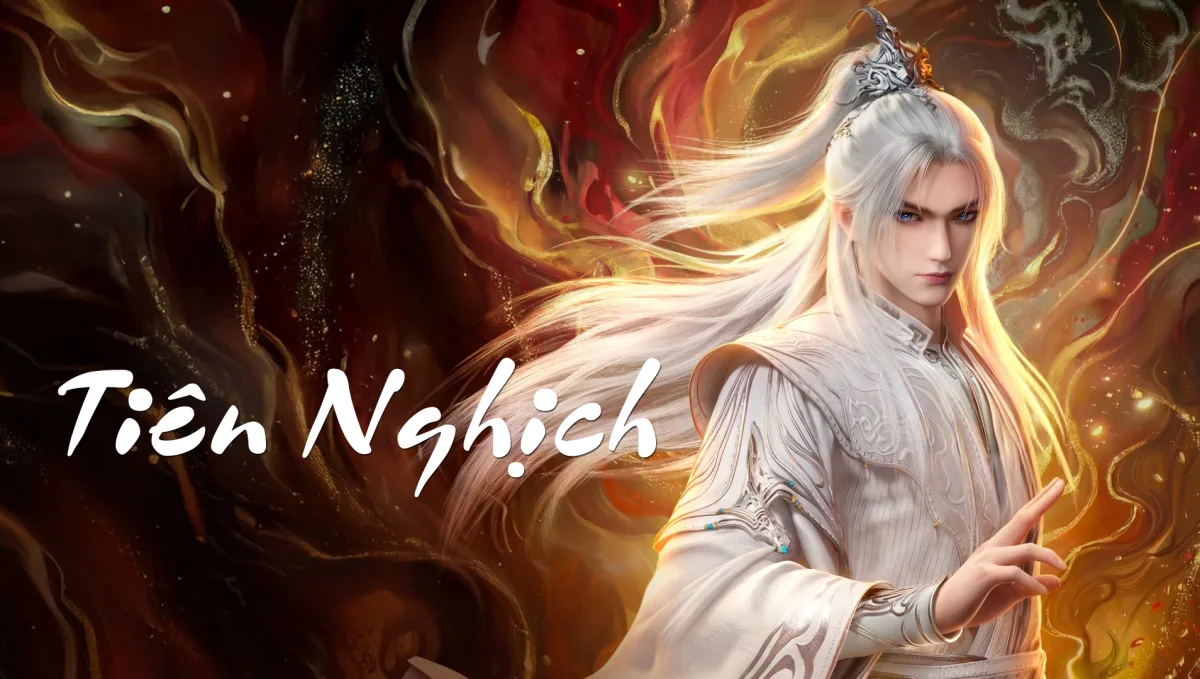
What changes at each First Step realm?
- Qi Condensation: the cultivator draws in spiritual energy and begins changing the body. Progress is counted in layers; this is the starting realm, not a general name for all cultivation.
- Foundation Establishment: the first major breakthrough after Qi Condensation lays the base for later cultivation. Accumulating more energy alone does not guarantee it; understanding and opportunity matter too.
- Core Formation: the cultivator’s power centres on a golden core. Golden Core is a naming clue for this stage, not an additional realm between Core Formation and Nascent Soul.
- Nascent Soul: the cultivator develops a spiritual form capable of acting outside the physical body. It is a major change from the core-based stage before it.
- Soul Formation: understanding a domain becomes central to progress. A domain expresses the cultivator’s insight; it is not another item to add to the realm list.
- Soul Transformation: the domain can materialise, and celestial spiritual energy becomes part of cultivation. This is a separate breakthrough beyond Soul Formation.
- Ascendant: domain and celestial spiritual energy come together in an Ascendant Crystal. This is the last main First Step realm, before the Yin–Yang transition.
Soul Formation vs Soul Transformation
Keep this short sequence in mind: Nascent Soul → Soul Formation → Soul Transformation. A character described as “peak Soul Formation” has not automatically entered Soul Transformation. “Peak” tells you how far they have progressed within the fifth realm, not that they have completed the next breakthrough.
There is also an early translation trap. Chapter 20 of the English novel uses “Spirit Forming” for the stage after Nascent Soul; later passages use Soul Formation. When checking a subtitle or an older passage, compare its position and the Chinese term 化神 before treating the unfamiliar wording as a new rank.
Layers, realms and Steps are different scales
A layer measures progress inside a realm. A realm is a major cultivation stage. A Step groups a much larger stretch of that progression. This is why “third layer” and “Third Step” are not remotely the same claim.
| Term you see | How to read it |
|---|---|
| Qi Condensation, layer 9 | Progress within Qi Condensation, not the ninth major realm. |
| Early, middle, late or peak Nascent Soul | Progress within Nascent Soul, not separate realms added after it. |
| First Step | The broad stage containing the seven realms in the opening table. |
| Ancient God star count | A different path; record it separately from ordinary cultivation. |
Qi Condensation is described with fifteen layers in chapter 17. Do not turn that into fifteen layers for every later realm, or assume another cultivation novel’s nine-layer chart applies here. First identify the major realm, then read the smaller qualifier attached to it.
Later novel realms: Second Step and beyond
Power-system spoilers follow. These are later novel ranks and titles, not a list of milestones already reached in the donghua. The table avoids plot outcomes, but it shows how far the hierarchy eventually expands.
| Stage of the system | Order | Important distinction |
|---|---|---|
| First-to-Second Step transition | Illusory Yin → Corporeal Yang | Two transition stages, rather than ordinary entries within the three Nirvana realms below. |
| Second Step | Nirvana Scryer → Nirvana Cleanser → Nirvana Shatterer | Three major realms in ascending order. |
| Transition toward the Third Step | Five Heaven’s Blights | Trials associated with the transition, not five interchangeable realm names. |
| Third Step | Nirvana Void → Spirit Void → Arcane Void → Void Tribulant | The four major Void realms, in order. |
| Late endgame | Heaven Trampling | Not an automatic promotion for reaching an exalted title. The Heaven Trampling Bridges belong to this later progression. |
Illusory Yin and Corporeal Yang can make charts look inconsistent. The novel describes them as the bridge between the first two Steps: changes to the origin soul and the shift from celestial energy toward origin energy explain why they sit between the larger groups. A chart that counts every named transition will be longer than one listing only major realms.
Where Exalt, Empyrean and Grand Empyrean fit
Near the upper end, the story also uses a hierarchy of standing and power: Exalt → Golden Exalt → Empyrean Exalt → Ascendant Empyrean → Grand Empyrean. These terms matter, but adding each of them after Void Tribulant as an ordinary new realm produces a misleading chart.
Keep the four Third Step realm names as the main reference. Treat the exalted titles as another level of distinction within the upper-end system, not as proof that each title holder has crossed into Heaven Trampling. The late novel uses Ascendant Empyrean and Grand Empyrean as distinct labels; neither is the early First Step realm Ascendant.
Ancient God stars are not a direct conversion chart
Ancient God development follows a star-based path with its own body cultivation and trials. A star count is not a shorthand way of saying Nascent Soul, Soul Formation or another ordinary realm. A comparison made during one fight is not enough to establish a fixed conversion for every character.
This is especially important when discussing Wang Lin. Specify whether a passage concerns his ordinary cultivation or his Ancient God body. Keep the two descriptions side by side when both matter; do not combine them into a single rank called, for example, “star-level Soul Transformation.”
Checking Wang Lin’s level in a specific episode
To place Wang Lin correctly, start with the episode or chapter you are on. A novel discussion and a donghua clip may describe very different points in his life. Beating someone from a higher realm does not, by itself, mean he has reached that realm.
- Identify the medium and the numbered episode or chapter, rather than relying on the upload date of a clip.
- Read the realm explicitly stated in the scene, including an early, middle, late or peak qualifier.
- Check whether the statement concerns ordinary cultivation or Ancient God development.
- Match that term to the appropriate table; do not import a later novel rank into an earlier donghua scene.
How many cultivation levels are there?
There are seven main First Step realms. Across the whole novel, the total depends on whether you also count transition stages, trials and exalted titles. Ancient God cultivation adds a separate path, not extra realms at the end of the same ladder. Compare charts by what they include, rather than assuming the longest one is the most complete.
If you want to know how that progression feels as a story rather than just a hierarchy, see our Renegade Immortal donghua review for its approach to Wang Lin’s journey, pacing and action.