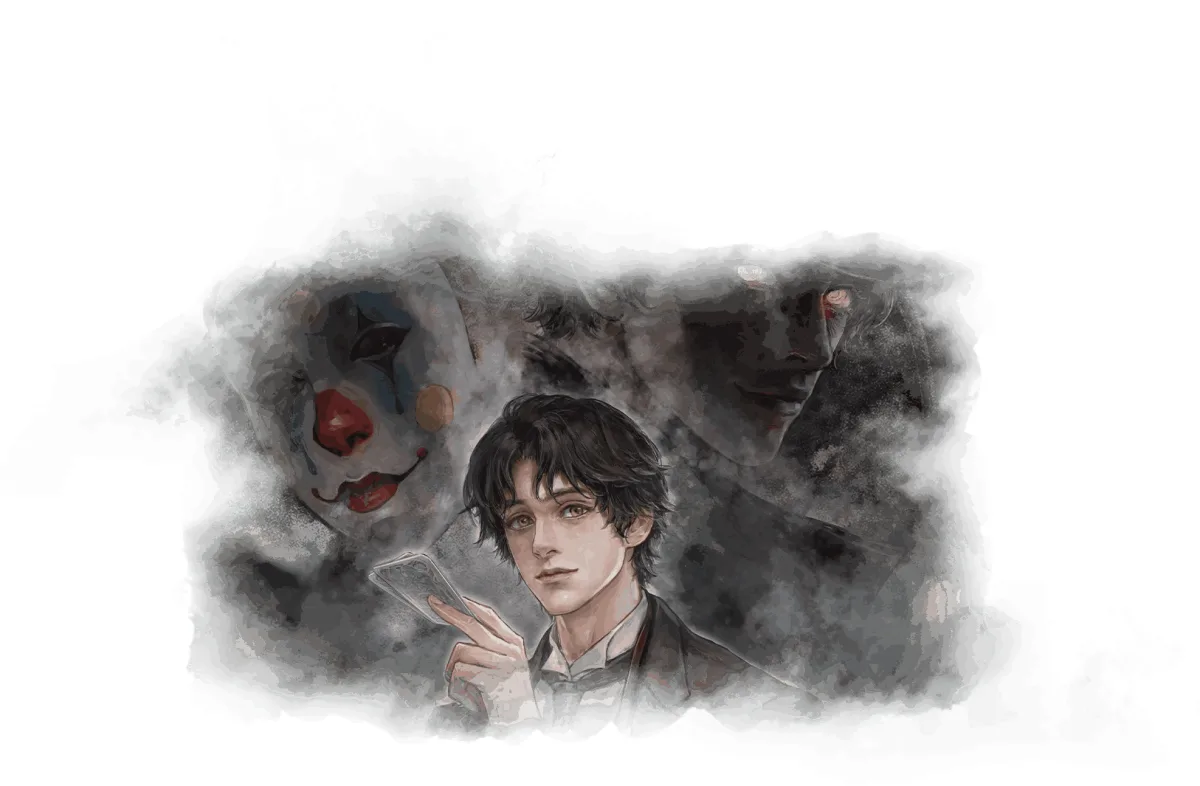
Which Lord of Mysteries comic is this?
This is the SevenBalloon adaptation of Cuttlefish That Loves Diving’s novel, identified on Yuewen’s official Lord of Mysteries project page. Older comic adaptations also appear under the same English title. Look for the SevenBalloon credit when choosing an edition; artwork and story coverage from different versions are not interchangeable.
Is the manhua worth reading?
For atmosphere, yes. The comic makes the appeal of this world visible quickly: formal clothes, industrial streets and occult objects belong to the same uneasy setting. It is a useful starting point if the length of the novel has kept you from trying Lord of Mysteries, and a visual companion if you already enjoy Klein’s world.
It is a less convincing choice for someone who wants the whole mystery in one finished format. Much of the pleasure comes from following why Klein suspects something, not merely seeing what he discovers. The novel gives that reasoning more space. The comic’s visual immediacy is inviting, but it is not a substitute for the complete prose story.
Klein makes curiosity feel dangerous
Zhou Mingrui finds himself living as Klein Moretti in a world of steam machinery, churches and hidden supernatural systems. Familiar-looking streets offer no guarantee that familiar rules apply. He needs information to survive, yet learning too much can create another problem.
That combination of curiosity and caution is the main draw. Klein is more engaging as someone trying to understand a dangerous situation than as a hero waiting for a new power. His normal interactions matter because he cannot simply announce everything he knows or fears. The tension lies in the gap between keeping up appearances and working out what is happening around him.
What the artwork adds
SevenBalloon’s color work gives the industrial and supernatural sides of the setting a shared mood. The attraction is not just elaborate imagery. Clothing and interiors make a social world legible, while ritual objects suggest another set of rules operating inside it. Readers who enjoy noticing a room before understanding its danger have a clear reason to try this format.
A comic can also give a clue a memorable shape. An object on a page is easier to picture later than an unfamiliar name encountered in a dense passage. The tradeoff is attention: an emphasized image may stand out immediately where prose can let a detail sit quietly among other observations. The two formats create different kinds of uncertainty.
Where the novel still has the advantage
Lord of Mysteries asks for more than remembering names and powers. The satisfying part is connecting an observation to a suspicion and then to a decision. Prose can linger inside those small revisions of thought. A quicker visual exchange may move smoothly while leaving less room for the reader to weigh the same possibilities as Klein.
If your favorite mysteries let you pause, question a conclusion and retrace the reasoning, the novel is the better starting point. If dense explanations tend to stop you before the setting becomes interesting, the comic offers an easier way in. Neither preference requires treating a shortened scene as automatically better or worse.
Comic, novel or donghua?
| Format | Best reason to choose it | Main tradeoff |
|---|---|---|
| SevenBalloon comic | Color, atmosphere and visual browsing | Not a finished replacement for the novel |
| Original novel | The complete first story and detailed investigation | A much larger prose commitment |
| Donghua | Movement, voices and an audiovisual interpretation | A separate adaptation with its own pacing |
The novel is the clearest recommendation for someone who already knows they want a long occult mystery. The comic makes more sense as an introduction or a companion. Choose the donghua if voices, movement and music are what draw you into an unfamiliar world.
Where to find the right edition
The official Lord of Mysteries page identifies the SevenBalloon comic and links to its Chinese reading platform. It also separates the novel and donghua, which helps avoid confusing their releases.
For English readers, the project page points to the Chinese comic rather than an English comic edition. Its English-language information is not itself a translation of the comic. If English access and a complete story are essential, the licensed digital novel is the more practical option.
Frequently asked questions
Why do Lord of Mysteries manhua chapter counts differ?
Different adaptations and translations appear under the same title. Match the artist and edition first; a higher number does not necessarily mean more of the SevenBalloon comic is available.
Is the SevenBalloon comic complete?
It is presented as a serialization on the official project page, not a complete adaptation. The completed first novel is a separate release.
Is it a straightforward action fantasy?
Its strongest appeal is occult investigation: learning the rules, noticing danger and piecing together unfamiliar information. Readers mainly seeking fast battles may find the careful setup less satisfying.
Sources and verification
- Yuewen Lord of Mysteries — primary source
Official source · accessed 26 Aug 2026