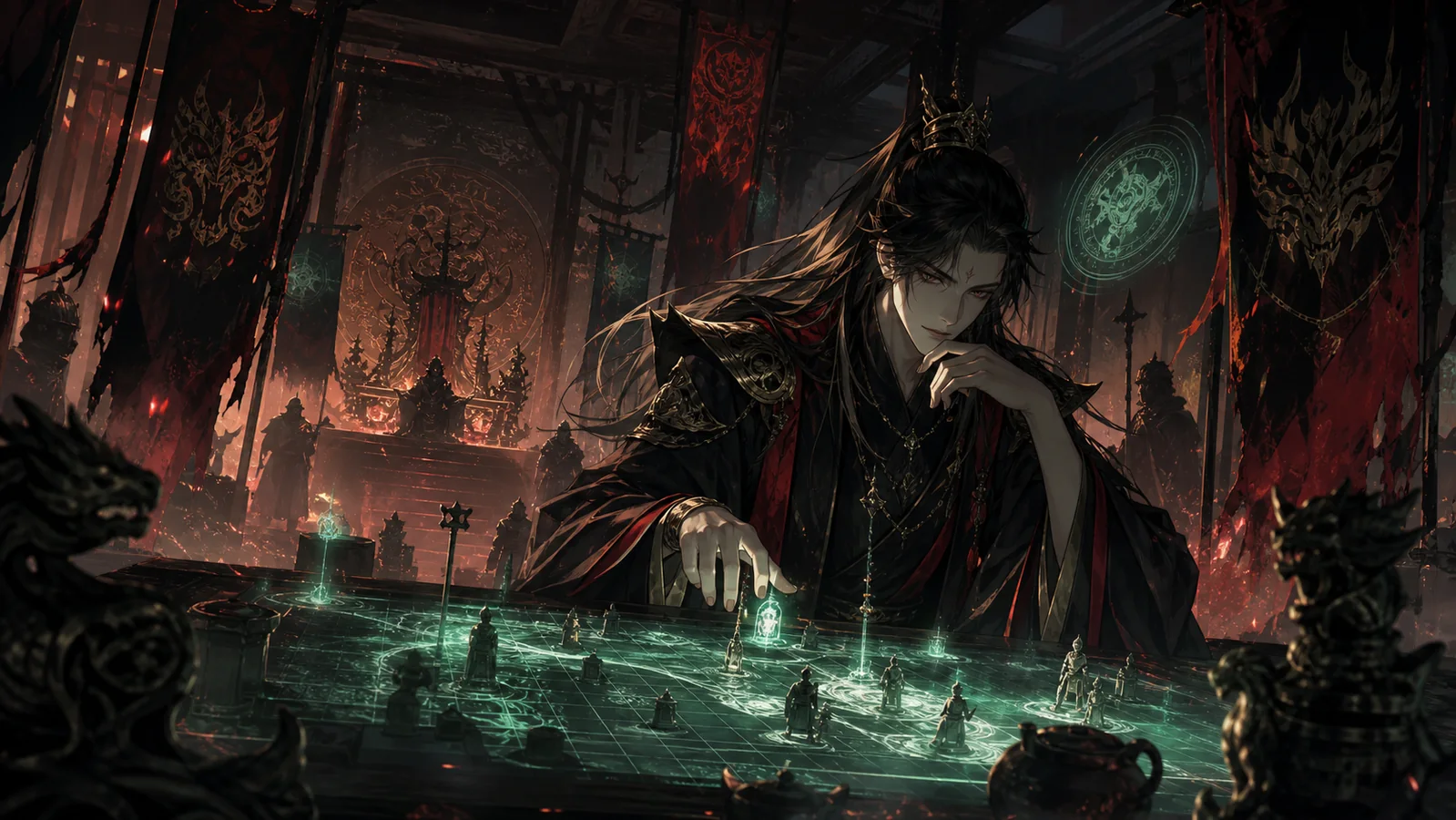
Is Magic Emperor worth reading?
Magic Emperor is at its best when Zhuo Fan turns an enemy’s confidence against them. Strength matters, but so do alliances, reputation and fear. Read it for a cultivation antihero who treats a confrontation as something to arrange long before the fight starts.
Zhuo Fan is entertaining because he usually understands the social battlefield before anyone else. The series is less effective when every arc repeats the same proof of superiority. Clever cruelty remains enjoyable; certainty eventually reduces tension.
Which Magic Emperor is this?
- Chinese full-color manhua, also known as Demonic Emperor.
- Licensed English comic title: The Devil Butler, credited to WuErComics on WebNovel.
- The prose novel is a separate format; chapter numbers do not carry across to the comic.
- Mild spoilers below: the premise and recurring conflicts, without major reveals.
The reincarnation hook
A betrayed demonic emperor awakens in the body of Zhuo Fan, a servant bound to the declining Luo clan. He possesses knowledge far beyond his new position but cannot simply leave the household. That constraint converts reincarnation into a tactical problem rather than immediate freedom.
The opening works because power, status and obligation point in different directions. Zhuo Fan may know more than his enemies, yet he lacks the public authority to act openly. Early victories depend on deception, preparation and using an opponent’s assumptions against them.
Zhuo Fan as strategist and antihero
Zhuo Fan is not softened into a misunderstood hero. He can protect the clan and still treat people as pieces. His charisma comes from consistency: sentiment is a vulnerability until experience forces him to admit that attachment can also become purpose.
The most satisfying scenes allow his plan to remain partially hidden. Readers see him create several bad options for an enemy, then understand why the apparent escape route was the real trap. When the story announces his superiority too early, the same confidence becomes performance rather than suspense.
Cultivation, politics and repeated arc design
Cultivation ranks define capability, but reputation and faction structure decide when that capability can be used. Clan debts, sect hierarchies and public challenges create consequences beyond winning a duel. This political layer separates Magic Emperor from a purely numerical power climb.
The formula becomes visible: an institution underestimates Zhuo Fan, a loud rival claims control, concealed preparation reverses the balance, and humiliation confirms the new hierarchy. Variations in location and faction keep the mechanism active, but binge reading makes repetition easier to notice.
Supporting cast and relationships
The Luo clan gives Zhuo Fan a reason to build rather than only destroy. Its members function as responsibility, leverage and evidence that his rebirth is changing him. Several women challenge his self-conception, though romantic attention can be distributed in ways that feel closer to genre expectation than equal character development.
Allies are most interesting when they retain goals outside Zhuo Fan’s plan. Too often, competence becomes another way to demonstrate that they correctly recognize his greatness. The story benefits whenever loyalty carries disagreement or cost.
Artwork and readability
The artwork prioritizes striking faces, aura effects and decisive reversals. Zhuo Fan’s expressions sell menace efficiently, and large confrontations remain readable even when energy effects fill the frame. Background detail varies; court and sect spaces can feel more symbolic than inhabited.
The long serialization shows visual growth, but translated editions can create a less stable experience than the art itself. Names, ranks and titles change between sources. Readers should avoid switching editions mid-arc whenever possible.
Best for and skip if
- Best for readers who enjoy antiheroes, face-slapping reversals, clan politics and protagonists who weaponize information.
- A good fit if ruthless decision-making is more appealing than moral reassurance.
- Skip if repeated domination arcs quickly feel empty or if a sympathetic protagonist is essential.
- Avoid random aggregators: inconsistent translation makes an already terminology-heavy story harder to follow.
Intelligence versus authorial protection
A strategist is convincing when a plan uses information available to the character and when failure remains possible. Zhuo Fan often meets that standard: he studies vanity, debt and institutional rules, then attacks where strength alone is inefficient. Those victories feel earned because readers can reconstruct the trap afterward.
The line weakens when an undisclosed resource appears exactly when needed or every opponent mistakes confidence for evidence. Intelligence then becomes authorial protection. Magic Emperor is more exciting when Zhuo Fan must choose between two costly wins than when the world supplies another fool to humiliate.
Translation, aliases and chapter-number problems
Look for The Devil Butler on WebNovel when you want the licensed English comic. Magic Emperor and Demonic Emperor are alternate names, while similarly titled prose results may lead to the novel or user-posted translations. The format and creator credit matter more than the thumbnail.
Chapter totals differ when editions split or combine installments. A larger number does not prove that a translation is further ahead or that the comic has ended. If you change editions, match the last scene you read to avoid skipping part of an arc.
Does the cruelty have a purpose?
Zhuo Fan’s ruthlessness is most meaningful when it conflicts with the obligations inherited through rebirth. Protection forces him to invest in people he would once have dismissed, and that investment gradually limits the fantasy of total independence. The change is incremental rather than a clean moral conversion.
When cruelty exists only to make an enemy look weak, it becomes applause bait. When it reveals how Zhuo Fan understands loyalty, fear or his former betrayal, it becomes character writing. Readers who enjoy the series will still differ over how often it achieves the second function.
Final verdict
Magic Emperor has a strong engine: a dangerous mind in a constrained body, forced to turn one failing household into a position of power. Its best arcs make cultivation political and strategy personal. Its weakest assume that another public victory is automatically a new dramatic idea.
Readers who accept that rhythm will find a confident, long-running antihero fantasy. Readers wanting genuine uncertainty should pace their reading rather than binge hundreds of chapters at once.
Frequently asked questions
Is Magic Emperor manga or manhua?
It is manhua, a Chinese comic. The licensed English comic on WebNovel is titled The Devil Butler.
Is Zhuo Fan a villain?
He is an antihero with a demonic past and a willingness to manipulate or kill. The story gradually adds responsibility without erasing his ruthlessness.
Is there romance?
Romantic attachment matters, but strategy, cultivation and faction conflict remain the primary engine.
Sources and verification
- WebNovel — primary source
Official platform · accessed 30 Aug 2026