Murim is the community of martial artists in many Korean manhwa: the fighters, schools, families and rival factions that make up a story’s martial world. Readers also use “murim” as a genre label for stories about that world. It is not a country or one shared universe connecting every comic.
Is murim Korean or Chinese?
Murim is the Korean reading of 武林, written 무림 in Hangul; the Mandarin reading is wǔlín. The characters mean “martial” and “forest,” but the expression refers to a community, not a literal woodland. The dictionary entry for 무림 gives the meaning “community of martial artists.”
This is why a Korean comic can feature Chinese-inspired mountains, schools and martial traditions. Manhwa identifies the comic’s publishing tradition; murim describes the martial society in its story. A familiar place or faction name does not mean two authors are using the same history or cast.
How do sects, clans and alliances work?
Start with what connects the members. A sect is usually organized around martial teaching, a clan around family, and an alliance around cooperation between groups. Those different bonds explain why a private quarrel can become everyone’s problem.
| Group | What holds it together | What to watch for |
|---|---|---|
| Sect or martial school | A teacher–disciple lineage and shared techniques | Who represents the school, inherits its teaching or damages its reputation. |
| Clan or martial family | Family ties, a surname and inherited standing | Who is the heir, who controls the family and whose actions bring it shame. |
| Martial alliance | An agreement between otherwise separate groups | Which leaders cooperate, who speaks for them and when their interests conflict. |
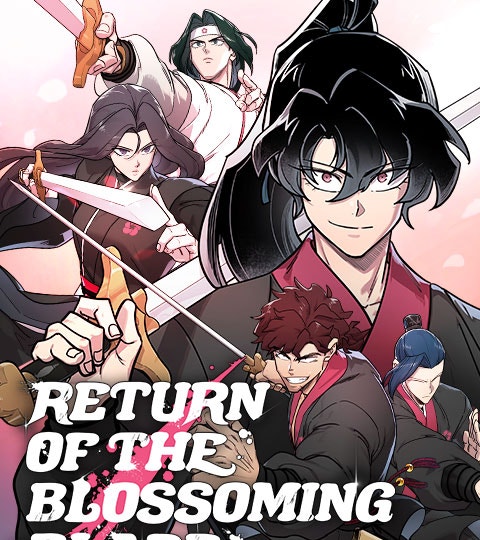
For a concrete sect example, Return of the Blossoming Blade follows Cheongmyeong as he tries to restore the diminished Mount Hua Sect. His goal is larger than winning his next fight: the school itself has to recover.
For a family-centered example, Skill Breaker of the Namgung Family ties a fighter’s second chance to his son Namgung Cheon’s life and the honor of their clan. The useful contrast is loyalty to a teaching institution versus obligations attached to a family name.
Treat these as a reading aid, not rigid translation rules. “Clan” can also translate a brotherhood or association whose members are not relatives. If the English label seems inconsistent, check whether the story actually describes blood relations, fellow students or allied groups.
What do orthodox, unorthodox and demonic mean?
Orthodox factions claim a place within the accepted martial establishment. Unorthodox factions operate outside it or reject its rules. A demonic faction or cult is often a further rival with its own leader and teachings. Individual stories decide whether these are separate camps or overlapping labels.
These names tell you about allegiance and reputation, not a character’s moral score. An orthodox elder can be corrupt, an outsider can keep a promise, and “demonic” need not mean a literal species of supernatural demons. Judge a faction by what its members do as well as what others call it.
To follow a crowded scene, identify the speaker’s group, who has authority over them and what they stand to lose. An insult to a disciple can threaten a school’s standing; a challenge to an heir can threaten a family’s succession. That is the connection between the politics and the fights.
Murim, wuxia, jianghu and cultivation: what changes?
- Murim or wulin names the martial community: the people and organizations involved.
- Jianghu is a broader social world that can also include wanderers, outlaws and others outside official life; its boundaries vary with the story.
- Wuxia is a Chinese storytelling tradition about martial heroes and concerns such as loyalty, justice and honor.
- Cultivation is the process of developing power. It can support a martial-arts story or extend into the pursuit of immortality.
A comic can therefore be manhwa, take place in a murim setting and give its hero a cultivation system at the same time. These labels answer different questions. Training alone does not make every fantasy story a murim story: look for a martial community whose loyalties and rivalries shape the plot.
Six terms you will meet in murim manhwa
- Qi or ki: energy a character trains or channels, often discussed as internal energy.
- Dantian: a center associated with storing or developing that energy.
- Meridians: the pathways through which energy flows in the story’s model of the body.
- Martial technique: a learned method such as a sword form, footwork or breathing practice.
- Master and disciple: a teaching bond that can carry duties of loyalty and protection.
- Heavenly Demon: often a title for a powerful leader; its meaning and holder belong to that particular story.
The energy systems are conventions of fiction, not medical descriptions. There is also no universal murim power chart: “peak master” or another translated rank may work differently in another series. Use the explanations in the comic you are reading instead of comparing ranks by name alone.
Which murim manhwa should you try first?
Return of the Blossoming Blade is a useful starting point if rebuilding a school interests you; the Mount Hua example above shows what gives its training a purpose. For a different emphasis, consider these two premises:
GOSU on WEBTOON begins with Gang Yong setting out to avenge his master, only to discover that his targets are already dead. Try it for a teacher’s legacy and a revenge setup with a comic reversal.
Nano Machine on WEBTOON brings nanotechnology into a martial academy where Yeo-un competes against his half-siblings. Try it for a succession struggle with an unusual source of power.
You do not need to learn every faction or rank before starting chapter one. Follow the main character’s immediate loyalties first. For a wider choice by tone and premise, our murim manhwa recommendations compare more starting points.