Verdict
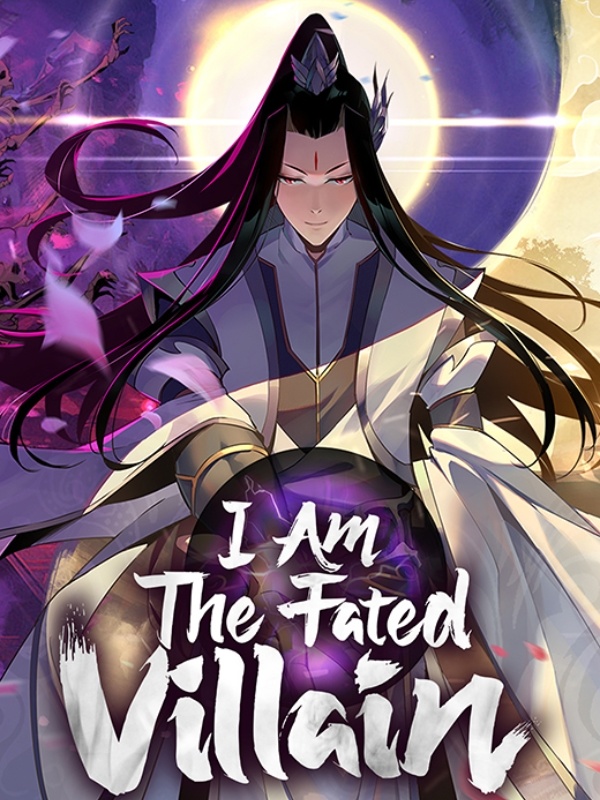
Gu Changge can sit with his tea while somebody else loses control of the room. That composure is a large part of I Am the Fated Villain’s appeal. Where a conventional cultivation hero fights to escape humiliation, Gu already holds a privileged position—and knows how to make another person’s anger serve him.
The manhua is worth trying for that reversal. Its schemes make loyalty, reputation and jealousy as interesting as physical strength. The important qualification is the kind of cleverness on offer: Gu uses considerable advantages, rather than beating an equal from an impossible position. If watching him exploit the imbalance sounds more entertaining than cheering an underdog, this is a good fit.
What is I Am the Fated Villain about?
This is the comic adaptation, available in licensed English editions on Tappytoon and WebNovel. Its premise combines a cultivation world with a lead who understands the villain role he has inherited.
Gu Changge awakens in a cultivation world occupying the privileged position of a villain. A more conventional protagonist, Ye Chen, already resents him, and the people around them are caught in the same hierarchy. The system gives Gu a way to benefit from the fortune attached to these favored figures—but also warns him that their luck can make a reckless move dangerous.
The interesting question is how to weaken a favored protagonist without provoking the fortune protecting him. Persuasion becomes useful for an unpleasant reason: other people’s loyalties offer another route to an advantage.
Gu Changge works because he understands appearances
When Ye Chen objects to the Holy Maiden being promised in marriage without a say, an elder strikes back. The room treats the protest as an insult to authority. Gu has little need to raise his voice when other people will defend his position.
The more interesting move comes in a prison conversation. Gu stops treating Ye Chen as the only person worth addressing and makes an offer to his remnant-spirit mentor. Her recovery gives her a reason to listen; Ye Chen’s jealousy gives Gu a reaction to exploit. Courtesy makes the pressure harder to answer than a simple insult.
Her refusal to abandon Ye Chen gives the exchange resistance. Gu can disturb a relationship without being able to purchase loyalty outright. That is what makes the tactic engaging: it works on different people for different reasons, with the mentor’s sense of obligation standing against his inducement.
Physical power remains underneath the conversation. Gu crosses the cell’s barrier easily, a reminder that he can afford to be patient in a room his rival does not control. His intelligence is entertaining, but it is not operating without protection.
The destiny system turns genre logic into currency
The warning about fortune backlash gives the system a useful job beyond handing out rewards. Gu has a reason to wait, withdraw or change someone’s impression before pursuing a larger gain. In his conversation with Su Qingge, apparent restraint causes her to reconsider him. A system notification immediately marks the shift as profitable.
A reward notification accompanying Ye Chen’s anger makes the idea easy to grasp: social disruption has a measurable value. The exact total is less important than the incentive. A damaged bond can be useful to Gu even before it gives him a new ally.
That mechanism gives conversations the forward motion usually supplied by a fight or a level-up. For a reader tired of cultivation contests decided only by who hits harder, it offers a different thing to watch for: the moment a person’s reaction becomes an opportunity.
The art sells elegance before violence
Posture does much of the work. Ye Chen leans into a protest with a clenched fist; Gu reclines above the gathering. A teacup becomes a useful visual prop because it gives him something unhurried to do while others grow agitated. His stillness makes control look effortless.
A shift from cool moonlight to warm prison torchlight changes the atmosphere without changing that composure. Calm close-ups face sharper, flushed reactions. The tension is readable in the expressions before a notification translates it into a reward.
The appeal of these encounters is presence more than choreography. An offer can feel aggressive without an elaborate exchange of attacks. If expressive dialogue scenes hold your attention, there is more to appreciate here than the lead’s polished design alone.
Can you enjoy a lead this manipulative?
The uncomfortable part is not hidden. Gu benefits when trust between other people becomes less secure. The system presents that disturbance as progress, which encourages us to follow the plan even when its aim is ugly. Enjoying his control of the conversation does not require mistaking it for kindness.
The marriage pressure, calculated offers and physical intimidation make this a poor choice if you need affection to be free of coercion. Gu’s polished appearance does not soften what he is trying to do. The attraction is following his calculation while recognizing the harm beneath it.
Where the suspense loses some bite
The system’s clarity has a cost. When a notification immediately tells us that someone’s distress has benefited Gu, there is less room to wonder whether he has misread the exchange. The reader gets a satisfying signal of progress, but not much uncertainty about that small tactical result.
Gu’s physical security also changes the stakes. The prison exchange asks how much more he can gain, rather than whether he can escape. That is a legitimate pleasure in a villain fantasy, but it may leave readers who prefer evenly matched opponents less invested. The satisfaction is in the maneuver; the lead’s survival is not the urgent question in that encounter.
AdaptLore scorecard
| Aspect | Assessment | Why |
|---|---|---|
| Tactics | Strong | The mentor offer makes relationship manipulation concrete and gives it resistance. |
| Lead presence | Strong | Courtesy, posture and expressions sell control without a long explanation. |
| Suspense | Mixed | Fortune imposes constraints, but physical security and instant feedback reduce uncertainty. |
Who should read I Am the Fated Villain?
- A strong fit if you enjoy following a plan even when the person making it is cruel.
- A weaker fit if you need credible danger to the lead in every confrontation.
- Skip it if coercion and unequal romantic relationships would overwhelm your interest in the schemes.
Status and where to read legally
Tappytoon and WebNovel carry official English comic editions. Tappytoon recommends its edition for readers aged 16 and over and offers free opening episodes. Check access terms and numbering if you move between platforms.
The English comic is ongoing. If you want to compare editions or follow its release status, see the I Am the Fated Villain status guide.
Frequently asked questions
Does I Am the Fated Villain have a harem?
Tappytoon’s synopsis describes multiple female leads gravitating toward Gu Changge, so expect harem elements rather than a single uncomplicated romance. If a reciprocal love story is your priority, villain-led cultivation may not be the right fit.
Is I Am the Fated Villain manhua complete?
Not in English: the licensed comic release is ongoing. If you want a finished story to binge, wait for that edition to reach its finale rather than using the novel’s status as a guide.
Do I need to read the novel first?
No. The comic introduces Gu Changge and the destiny system. If you later change formats, match the story event rather than assuming comic and novel chapter numbers align.
Continue reading
Continue with I Am the Fated Villain manhua status, best cultivation manhua, or Magic Emperor review.