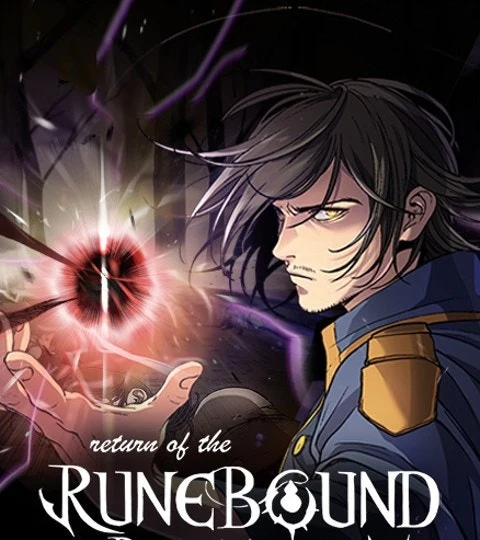
A second life sounds useful. A second life with somebody else's enemies, reputation and teaching job sounds considerably less relaxing. That is the reason to try Return of the Runebound Professor: the fantasy is not simply about gaining magic, but about being mistaken for someone who should already understand it.
The webcomic is worth a look if you enjoy unfamiliar magic, borrowed identities and an adult protagonist under pressure to appear competent. The opening takes a deliberately atmospheric route into that setup, though. If you want the classroom premise immediately, its long passage through death and disorientation may test your patience. This review focuses on that introduction and the story's starting proposition, with mild setup spoilers rather than later-arc judgments.
What is Return of the Runebound Professor about?
Noah Vines comes from Earth and finds himself inhabiting Magus Vermil, a murdered professor at a magic academy. Vermil has left behind more than a body: people already know his name, dislike him and expect him to know his subject. Noah has to navigate those expectations while learning how this world's magic works.
That mismatch gives the title its bite. Being a newcomer would normally excuse a basic question. Being the professor makes the same question suspicious. Even before the finer rules of runic magic matter, the situation is easy to understand: Noah has landed in a job whose responsibilities are much bigger than his preparation.
Actus wrote the original novel. The WEBTOON adaptation credits Laurel Pursuit for art and Daniel Krauss for adaptation. This article is about the webcomic, not a review of the entire prose series.
Why the borrowed identity is the strongest hook
There are three different problems here, and they should not be confused. Noah needs knowledge, he needs to manage a reputation he did not earn, and he carries a professor's responsibilities before he is prepared for them. A new spell could help with one problem without fixing the other two.
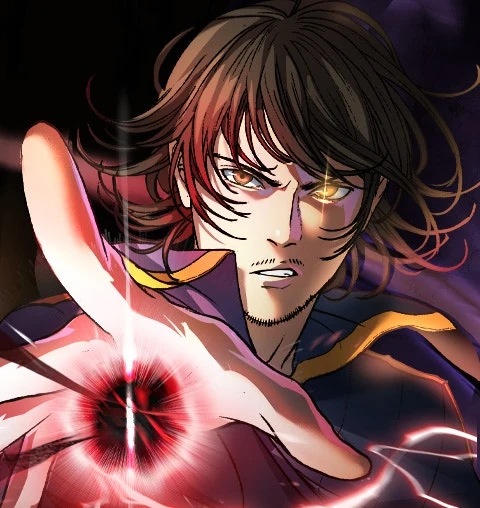
That is a promising foundation for progression fantasy. Power is more interesting when it has to solve a particular problem than when it exists only to make the next opponent look small. Here, the professor role supplies a reason to care about understanding magic, not just possessing it. Someone expected to explain a subject cannot hide behind spectacular results forever.
The inherited reputation also gives the premise a social obstacle. Noah cannot introduce himself to everyone with a clean slate. For readers who like an outsider rebuilding an established person's life, that may be a stronger draw than the academy setting itself. If that is your favorite part of this setup, our The Greatest Estate Developer review is another useful place to look.
The setup has an obvious risk, too: an academy story can become frustrating if the classroom is only scenery for a powerful hero. What gives this one a reason to go beyond that is Noah's lack of preparation. The teaching role will matter most when it demands something he cannot solve through force.
The opening artwork makes death feel like a place
The introduction does not treat reincarnation as a quick box to tick. Dark expanses, drifting points of light and a small figure moving through them stretch the distance between Noah's old life and his arrival in a body. The scale is the point: he looks tiny next to what is happening around him.
The contrast between that dark space and bursts of pink and gold is effective. You can follow the change in intensity without being handed a page of explanation. Then the return to a wounded human body makes the situation feel physical again. It is an arresting way to begin a story whose title might otherwise suggest a fairly comfortable magic-school adventure.
There is a trade-off. Wide gaps and isolated images can build atmosphere, but they also mean more scrolling before the practical problem becomes clear. On a phone, that rhythm may feel immersive; if you prefer dense pages and brisk scene-setting, it may feel drawn out. The opening's presentation is a reason to sample the comic itself before choosing it solely on the title.
How much should you expect from the magic premise?
The novel's official description introduces a further complication: Noah can return from death, but dying still wounds his soul. That is worth knowing if descriptions of the series have made him sound simply invulnerable. Repeated survival and freedom from consequences are not the same idea.
For the comic, the useful starting question is not “Where does Noah rank?” but “What does he actually understand?” The setup depends on a gap between having access to a magical world and knowing how to function in it. Going in for that learning problem is more sensible than expecting an effortless victory lap from the first episode.
It also leaves room for a legitimate reservation. A lead who can survive extraordinary danger needs other things worth losing. The professor's responsibilities and inherited relationships are promising answers to that problem. That tension, rather than invulnerability on its own, is what would make the magic worth following.
Before you start reading
Is it a manhwa or a webcomic?
Webcomic is the more accurate label here. It adapts Actus's English-language novel, and Laurel Pursuit describes itself as a US-based studio. You may find it through a search for “Return of the Runebound Professor manhwa,” but a vertical reading format does not by itself make a comic Korean.
Should you read the novel first?
You do not need the novel to understand the comic's starting situation. Start with the WEBTOON edition if you want the illustrated introduction; choose the prose version if a text-first experience is what you prefer. Do not use a novel chapter number as a direct guide to your place in the comic: they are different editions, not interchangeable lists of installments.
Where is the official English comic?
The English adaptation is available on WEBTOON under its full title. Search within the platform for Return of the Runebound Professor and check the Actus and Laurel Pursuit credits. That is the simplest way to avoid landing on the prose edition or an unrelated academy story with a similar title.
The decision: try it for the professor problem
Runebound's best invitation is the awkwardness of its central role: a man who needs instruction is expected to provide it. Add an inherited reputation and a visually ominous arrival, and there is enough here to justify starting the comic.
Choose it if you want an identity problem alongside the fantasy progression. Approach more cautiously if your priority is an immediate classroom comedy or a hero whose competence never wavers. The opening is selling uncertainty first, and that is precisely where its interest lies.